Pablo Remón brings Verborrea to Madrid with Javier Cámara, Israel Elejalde, Marta Nieto and Emilio Tomé. The play links a fictional punk band from the late 1980s to a family shaped by Francoism.
A fictional punk band drives a family rebellion when Verborrea opens in Madrid on 1 October. Written and directed by Pablo Remón, the play brings Javier Cámara, Israel Elejalde, Marta Nieto and Emilio Tomé to Nave 10 at Matadero Madrid.
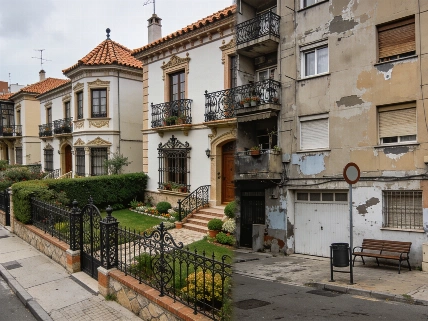
The story begins in a settlement for Patrimonio workers in the Valle de los Caídos area. Two brothers grow up there under an aggressive Francoist father. Their family history later feeds into the rise and collapse of Verborrea, a fictional punk group from the late 1980s.
Punk is more than a backdrop here. Remón uses it as the language of a story about nihilism, chaos and anarchy. Israel Elejalde plays Segis, also known as Segismundo Tóxico, the band's rebellious singer. Javier Cámara plays Kike, his older brother and manager. He also narrates the story.
Verborrea is presented as an absolute premiere at Nave 10 Matadero and is produced jointly by Nave 10 Matadero and Buxman Producciones.
The play is built like an old cassette. Side A follows the brothers' childhood. Side B turns to the band's rise and collapse. In the first half, Segis confronts his father and rejects structures of power. The story then moves into Verborrea's unstable public life.
Remón has drawn on parts of his own experience. He has spoken of having a very Francoist family, but he also stresses that the play greatly magnifies that reality instead of copying it literally. The setting is deliberately extreme. It gives the story room to deal with rebellion, inheritance and the need to escape an order imposed by someone else.
The punk story is carried mainly by language.
The production’s character assignments give the ensemble a deliberately shifting shape: Marta Nieto plays Lola Metralla, while Emilio Tomé takes on Teodoro and Johnny Casetes. The roles are part of the show’s movement between the family’s private history and the band’s public mythology.
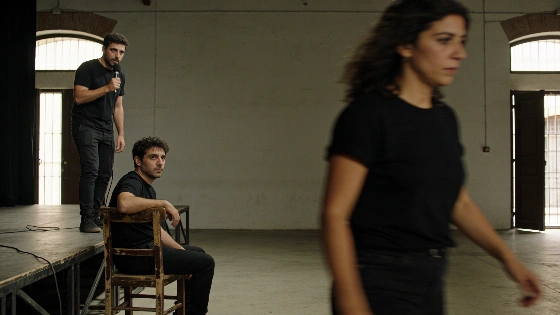
Remón has chosen a spare, minimalist staging. The words carry the story, and the audience has to imagine much of the world beyond what appears on stage. That stripped-back approach goes against the loud visual image often linked to punk, as well as the meaning of the title itself. Monologues rebuild the brothers' lives while the actors move between the two sides of the story.
Marta Nieto and Emilio Tomé each play a different character on each side of the production. Tomé has described that double change as one of the things theatre makes possible. Performers can become several people at once. The same stage must hold the brothers' private history and the band's public mythology.
Remón arrives with major recognition behind him. He won the Goya for best adapted screenplay in 2020 and the National Prize for Dramatic Literature in 2021. Cámara has praised the director's current moment. He has also said that the work's literary complexity is easier to experience than to explain.
Part of the cast previously worked with Remón on Vania x Vania. He has presented Verborrea as a different kind of project, even though it grows out of that earlier collaboration. Remón valued writing for a defined cast and specific actors. He also credited them with taking a leap of faith on his projects. That trust shapes a production built less on spectacle than on performers carrying two connected worlds.
Verborrea will run at Nave 10 of Matadero Madrid from 1 October to 1 November 2026, according to the official Madrid Destino ticket service. Nave 10 lists the show as an absolute premiere, produced jointly by Nave 10 Matadero and Buxman Producciones. The month-long run places it within the venue's regular 2026 programme, rather than treating it as a one-day event. The play does not recreate punk through visual excess. It turns rebellion into a story about memory, language and family power. Audiences in Madrid will have to complete much of the band's story for themselves.