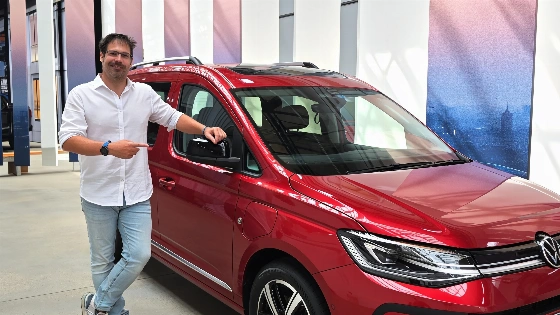
Volkswagen’s Caddy 2027 arrives with a 12.9-inch touchscreen, Digital Cockpit Pro, and a plug-in hybrid offering up to 119 km of electric range. The model keeps its functional shape but raises the bar on tech and efficiency.
Volkswagen has thrown down the gauntlet in the compact van segment by launching the Caddy 2027 with a plug-in hybrid system capable of 119 km of electric-only driving—an unprecedented figure for its class. This move instantly shifts expectations for what a family or business van can deliver in urban and suburban Spain.
Forget radical exterior changes: the Caddy 2027 keeps its boxy, high-roofed silhouette, but the real transformation is inside. The dashboard now centers around a 12.9-inch touchscreen, replacing the old 10-inch unit, and every version comes standard with Digital Cockpit Pro. Volkswagen’s focus is clear: digitalization and usability, not flashy design for its own sake.
Our goal with the new Caddy was to prove that a practical van can also be a technological leader — efficiency and digital comfort no longer belong only to premium SUVs.
Buyers can choose between two diesel engines—a 2.0 TDI with 102 CV and manual gearbox, or a 122 CV version paired with DSG automatic—both front-wheel drive. But the real headline is the 1.5 TSI Hybrid: a plug-in system combining a 116 CV petrol engine and a 116 CV electric motor, delivering 150 CV and 320 Nm of torque. The 19.7 kWh battery enables up to 119 km of WLTP-certified electric range, with charging speeds up to 11 kW AC or 40 kW DC. A 10–80% top-up takes just 26 minutes on a fast charger.
Practicality remains the Caddy’s trump card. The standard model measures 4,498 mm long, while the Caddy Maxi stretches to 4,851 mm and offers seven-seat configurations. Sliding side doors and a squared-off rear maximize usable space, with up to 2,556 liters of cargo volume when configured for two seats. The interior’s regular shapes and easy access outclass many SUVs, especially for those who value function over floating consoles or ambient lighting.
Volkswagen has also refreshed the color palette, introducing Sunset Red, Reed Green, Pardo Grisáceo, and Negro Grenadillo, alongside new wheel designs and subtle tweaks to bumpers and headlights. Yet, the Caddy’s visual identity remains unmistakably utilitarian—by design, not by accident.
Pricing starts at €33,470 for the entry-level 2.0 TDI (102 CV, Origin trim), rising to €37,145 for the 122 CV DSG, and €42,095 for the PHEV Origin. The Caddy Maxi begins at €35,405, with the seven-seat plug-in hybrid at €43,790. The Outdoor trim, with more equipment, pushes the short PHEV to €45,555.
In a market crowded with rivals like the Ford Tourneo Connect, Citroën Berlingo, Peugeot Rifter, and Renault Kangoo, the Caddy 2027 does not win on price. Ford’s technical kinship makes it the most direct competitor, while the French models undercut Volkswagen on cost and match it on practicality. What Volkswagen offers in return is a more refined cabin and a digital experience that, for some, justifies the premium—though the reliance on touch controls over physical buttons may not please every driver.
For those tracking Volkswagen’s electrification strategy, the Caddy 2027’s PHEV system is a logical extension of the brand’s push seen in models like the ID California Cruise, as reported earlier. The Caddy’s 119 km electric range sets a new benchmark for plug-in vans, especially in Spain’s urban low-emission zones, where zero-emissions badges are increasingly valuable for both private and commercial users.
Volkswagen’s decision to keep the Caddy’s exterior conservative while overhauling its tech and electrification options is a calculated bet. The brand is banking on buyers who prioritize real-world usability, digital convenience, and the ability to drive long distances on electricity alone. The price premium is real, but so is the leap in technology and efficiency. For families and businesses that need space without sacrificing modern features—or for those who simply want to outlast the next round of urban emissions rules—the Caddy 2027 is no longer just a practical choice. It’s a statement about where the segment is heading, and Volkswagen is determined to lead, not follow.