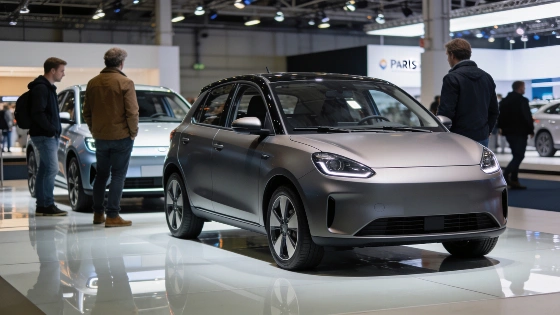
At the Paris show, four models made in Spain have drawn nearly 150,000 orders, Volkswagen Group says. Executives are also pressing European institutions for a framework to support investment.
SEAT’s Martorell plant near Barcelona began building the Volkswagen ID. Polo and CUPRA Raval in spring 2026. Volkswagen’s plant in Pamplona, Navarra, has recently started production of the ID. Cross and Škoda Epiq.
Together, the four models have received nearly 150,000 orders, according to Volkswagen Group’s announcement around the show. The figure puts the cars forward as an entry point to electric mobility for European customers, but orders alone say little about how many vehicles have reached buyers.
The four models share more than 80% of their components and technologies, according to Expansión.
Spanish newspaper Diario de Navarra reported that about 50,000 orders were for the Volkswagen ID. Polo. Volkswagen Group has not provided a public breakdown for the CUPRA Raval or the ID. Cross and Škoda Epiq. The total does not establish actual sales or deliveries. Nor does it show whether demand will last.
Production is split between Barcelona and Navarra, with each plant building two models for the group’s European push.
Volkswagen Group has presented its Spanish production model as a basis for its broader “For Europe” initiative. The group says it intends to apply the experience of Martorell and Pamplona at other European plants.
At the 91st edition of the Salón Internacional del Automóvil de París, the cars shared the floor with a wider debate over the pressures facing manufacturers. Grupo Volkswagen executives urged European institutions to create a framework that would let European carmakers keep investing and compete with brands from other regions.
The discussion covered rules tied to the “Made in Europe” principle and emissions regulation. Trade with China was also on the agenda.
The executives were asking for a policy framework, not announcing that new rules had been adopted. They also stressed the value of Europe’s automotive industry and pointed to the group’s work on innovations and technologies intended to make its products more attractive.
The four cars belong to Volkswagen Group’s Electric Urban Car Family, which targets the more affordable city-car segment. The programme aims to extend electric mobility beyond more expensive models. The order total does not establish actual sales or deliveries, or show whether demand will endure.