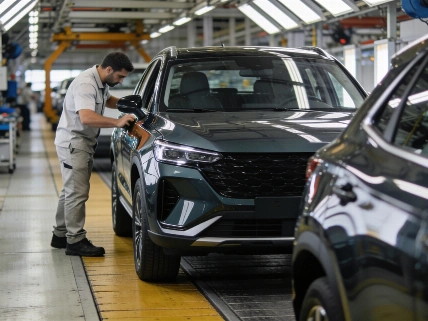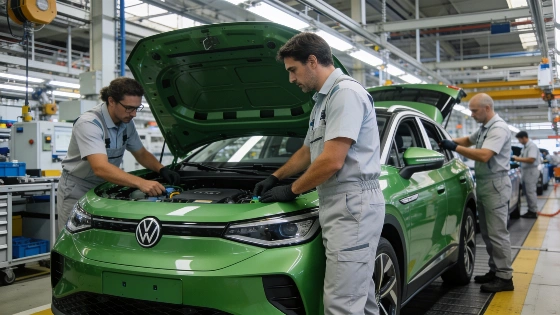
The first ID Cross has rolled off the line at Volkswagen’s Navarra factory, marking the start of mass production of the brand’s first electric SUV built at Landaben. EFE reports that the car left the line on September 18, 2026, becoming the first fully electric Volkswagen produced at the plant. It was a Life trim with a 155 kW electric motor, finished in Verde Nori.
The ID Cross completes a four-model electric project that brings Volkswagen, Škoda, and Cupra together under one production plan. Navarra is already building the Škoda Epiq, while Martorell handles the Volkswagen ID Polo and Cupra Raval. All four use the same platform, designed to make electric cars more affordable for European customers. With the ID Cross launch, Volkswagen’s Spanish production network is now fully electrified.
By the start of series production, the Navarra plant had already received around 10,000 pre-orders for the ID Cross, signaling strong demand before the official rollout.
Navarra can now build four models at once, two electric and two combustion-engine vehicles. Its production lines assemble the T-Cross and Taigo alongside the ID Cross and Škoda Epiq. CEO Thomas Schäfer said at the launch, "very few plants in the world can do this." The first ID Cross, painted Verde Nori, is headed to Germany. The model will ship to 34 countries, making the Spanish plant a basic supply point for Volkswagen’s electric push. EFE reports that the ID Cross will be sold in 34 markets, with the first car going to Germany.
The changes behind the scenes have been large. Volkswagen invested over €1 billion to electrify the Navarra plant and rebuild its production lines. It retrained workers and is preparing to add about 1,000 new jobs. The larger project, which includes the gigafactory in Sagunt, totals €10 billion in investment. Training alone took more than 290,000 hours. Cinco Días reports that this investment completes the plant’s shift to electric vehicle production.
Local media say Navarra will build about 24,300 ID Cross units from September through the end of 2026. The plant aims to beat its record of 353,353 vehicles, set in 2011. Its new flexibility lets it adjust as the market continues to use both electric and combustion models.
Volkswagen now treats the Iberian Peninsula as one industrial region, linking operations in Pamplona, Martorell, and Palmela in Portugal. André Kleb, head of Production for the region, said this approach is raising the profile of Spain and Portugal within the group. The next goal is to build over one million vehicles a year across the three plants.
For Navarra, the launch matters to the factory and its workers. President Michael Hobusch called the ID Cross rollout "the culmination of a change" that makes the plant more competitive and protects jobs. The regional government and labor groups have both called the project a basic stage for local industry and employment. EFE says the launch event brought together top officials, including the president of Volkswagen Navarra, Navarre government head María Chivite, and Spain’s central authorities, reflecting the project’s political and economic importance.
In recent years, Volkswagen Navarra has made record investments in the plant. In 2025 alone, €289.1 million went in, with €220.2 million set aside for the new electric models. That investment has helped the factory diversify and remain relevant as the car industry moves toward electrification.
Spain’s car sector is changing fast. The DGT is preparing to roll out new license plate series, as reported earlier, while the country’s manufacturing sector is also finding a new direction. Volkswagen’s investment in electric mobility goes beyond a technical upgrade: it is a bet on Spain and Portugal as the backbone of its European production network.
Volkswagen’s Navarra plant has shifted from making only combustion cars to building a future where electric and traditional engines share the same floor. Billions in investment and a unified regional plan have made the Iberian Peninsula a powerhouse in the group’s global plans. The ID Cross signals that Spain’s factories are ready to lead the next phase of European car manufacturing.