Volkswagen will cut 50,000 jobs and reduce production in Europe by 2030, putting the future of four major German factories in doubt. The company is responding to overcapacity and growing pressure from Chinese automakers.
Volkswagen plans to cut 50,000 jobs across its European operations by 2030, leaving the future of four German plants in question. The company’s supervisory board confirmed the scale of the cuts, which will affect the entire Volkswagen Group—including Audi, Porsche, and CARIAD—not just VW Passenger Cars. About half of the job losses could be in Germany, but the final breakdown is still being negotiated.
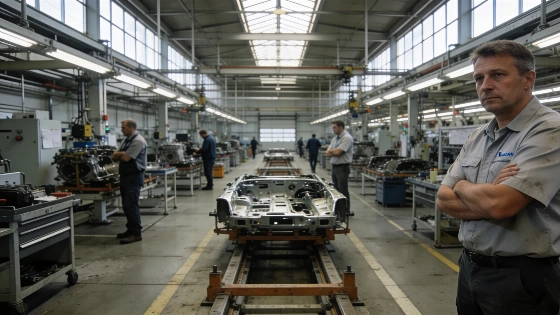
The company says it can build half a million more vehicles per year than it can sell in Europe. To address this, Volkswagen will cap annual output at nine million cars. This puts factories in Emden, Zwickau, Hannover, and Neckarsulm at risk, as none currently has a guaranteed new model after 2031. Management has set a deadline of June 2027 to present a new plan for these sites. While no closures have been announced, Volkswagen is considering alternative uses for the plants.
Roughly 37,000 job reduction agreements have already been signed within the Volkswagen Group, indicating that the restructuring process is not just theoretical but is being implemented through formal arrangements.
The main reasons for the cuts are falling European sales and rising competition from Chinese carmakers. Volkswagen’s leadership sees restructuring as necessary to defend its position. The company is aiming for a 9% operating margin by 2030, or €31 billion in operating profit. To reach this, it will halve its model range by 2035 and reduce interior equipment combinations by 75% to simplify production. Industry analysis cited by ad-hoc-news.de notes that current margins are too low to fund needed investments in software and battery technology, making these changes financially necessary.
The impact on workers and local economies is immediate. Volkswagen has not said which countries or divisions will be most affected, but the uncertainty is already being felt in Germany’s industrial regions. The risk of plant closures or conversions is real, even if the company has not announced any shutdowns yet. The plan also includes a management overhaul, with fewer executive layers and a new pay system tied to results. German labor agreements protect employees from operational layoffs until 2030, so most job reductions are expected through voluntary departures, early retirements, and internal transfers, as reported by ad-hoc-news.de.
Volkswagen expects the transformation to be costly. The company has set aside €135 billion for investment and R&D between 2027 and 2031, focusing on consolidating platforms, electronics, and driver assistance systems. The strategy will treat Western and Eastern markets differently, reflecting changes in the global car industry. Volkswagen is also considering asset sales and reducing its business holdings by a third.
The Volkswagen supervisory board has already approved a comprehensive turnaround plan, but the specifics for each plant are still subject to ongoing negotiations and further decisions. The company’s financial goal is to achieve an 8–10% operating margin by 2030, a significant increase aimed at ensuring long-term competitiveness.
The future of Seat remains unclear. Industry insiders expect the Spanish brand to be phased out in favor of Cupra, but Volkswagen has not made a formal announcement. This follows earlier reports about retiring Seat and shifting focus to Cupra, though the company has not confirmed the move publicly.
According to elespanol motor, Volkswagen’s new direction is a direct response to pressure from Chinese competitors and a changing European market. The company’s willingness to make deep cuts in both jobs and its product lineup marks a shift from its previous, more gradual approach.
Volkswagen is betting that shrinking and focusing on fewer, more competitive models will help it survive. The cost will be measured in jobs and the future of Germany’s industrial regions. The next three years will show whether Volkswagen’s leadership can carry out this transformation, or if some of its plants will be left behind.