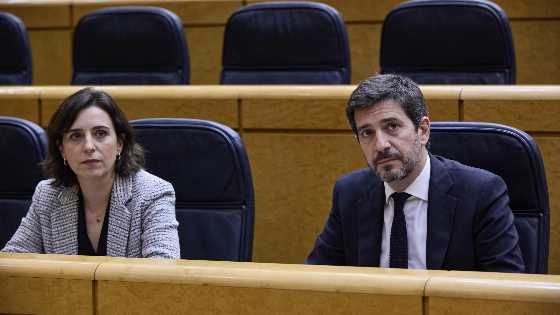
Vox now holds just two seats in Madrid’s city council after expelling Carla Toscano and Ignacio Ansaldo. The party faces its weakest position ahead of the 2027 elections. Administrative changes and legal disputes have reshaped the group.
Vox’s presence in Madrid’s city council has been reduced to its lowest point since entering the capital’s political scene. Following the definitive expulsion of Carla Toscano and Ignacio Ansaldo, the party retains only two councillors—Arantxa Cabello and Fernando Martínez Vidal—within its official municipal group. The administrative process confirming the expulsions concluded on August 7, with the decision published in the Boletín Oficial del Ayuntamiento de Madrid a week later. Both Toscano and Ansaldo, along with Javier Ortega Smith, now serve as non-affiliated councillors, stripping Vox of its previous strength in the chamber.
This shift leaves Vox just at the threshold required to maintain its own group in the city council. According to the council’s internal regulations, a minimum of two councillors is necessary to preserve the organizational, political, and financial advantages of group status. Despite three of the five councillors elected in 2023 now being outside the party, the rules specify that those who remain are considered the legitimate group members for all purposes. The party’s internal crisis is set to overshadow its final political term before the 2027 municipal elections.
The conflict originated from a prolonged dispute between Javier Ortega Smith and Vox’s national leadership. Ortega Smith, once a key figure in the party, resisted efforts to replace him as municipal spokesperson with Arantxa Cabello. Toscano and Ansaldo sided with Ortega Smith, deepening the division. In February, the national leadership suspended Toscano and Ansaldo’s rights, following similar action against Ortega Smith, and requested Cabello’s recognition as spokesperson. The city council initially declined to alter the group’s structure, maintaining all five members.
By April, Vox formally expelled Ortega Smith, Toscano, and Ansaldo, seeking their reclassification as non-affiliated councillors and leaving Cabello and Martínez Vidal as the sole group members. Toscano and Ansaldo challenged their expulsions in court, temporarily halting the process. After withdrawing their legal requests, the administrative procedure resumed, and their appeals were ultimately dismissed by the council’s Secretariat General. The final resolution confirmed that Vox had followed proper procedures and that the expulsions were valid, with the city council refraining from judging the substance or legality of the party’s internal decisions.
Despite losing group status, Ortega Smith, Toscano, and Ansaldo retain their council seats and can participate in sessions and committees, but without the privileges of group membership. Vox, meanwhile, must adapt to operating with fewer resources and only two councillors. The council’s technical services have been instructed to implement necessary adjustments following the expulsions.
Ortega Smith’s departure from the municipal group in July was followed by his exit from Vox’s parliamentary group in Congress, moving to the Mixed Group. In a letter to party leader Santiago Abascal, Ortega Smith cited irreconcilable differences and accused the leadership of betraying the party’s founding principles. He has not ruled out launching a new political project.
Madrid’s city council has seen similar internal ruptures before. In 2023, Ciudadanos lost more than half its councillors shortly before the elections, with several finishing their terms as non-affiliated members. Earlier, a split in Más Madrid led to the creation of the Recupera Madrid movement, though a court later ruled that its members should be classified as non-affiliated rather than forming a new group. These precedents highlight the volatility that can arise from internal party disputes in local government.
Madrid’s city council operates under strict rules regarding group formation and membership. The minimum threshold for maintaining a group is designed to ensure stability and clear representation. When internal conflicts lead to expulsions or resignations, the remaining members retain group status, while those expelled become non-affiliated. This affects not only political influence but also access to resources and committee assignments. The current situation with Vox underscores the impact of party discipline and internal cohesion on local governance, especially as the city approaches another election cycle.