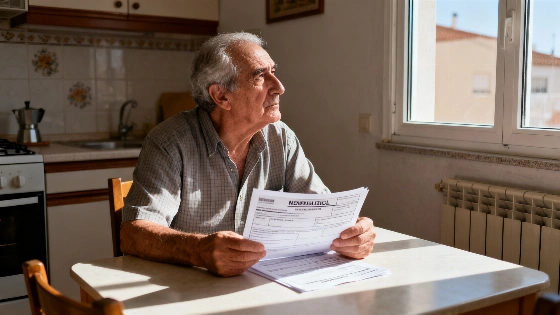
Spain introduces annual payment of 525 euros for pensioners without owned housing. Pensioners who receive non-contributory old-age or disability benefits and do not own their own home can count on additional support from the government. The new annual payment is designed to partially offset rental expenses.
An annual payment of €525 is now available to those receiving a non-contributory old-age or disability pension and renting housing. This measure aims to support people with minimal income who have not accumulated enough work history for a standard pension and are forced to rent an apartment.
To be eligible for the payment, several conditions must be met. First, the applicant must have an officially approved non-contributory old-age or disability pension. Second, they must not own residential property. Third, there must be an active rental contract in which the pensioner is the primary tenant. If several recipients of non-contributory pensions live in the same apartment, only one — the one listed in the contract — is entitled to the payment.
Key requirements
Additional conditions include: there must be no family or marital ties with the landlord (up to the third degree inclusive), and proof is required that the rented dwelling is the primary residence. For this, the lease must be for at least one year, and the pensioner must have lived at this address for at least 180 days prior to applying.
How to apply
You can apply for the payment through official Imserso channels or through social protection agencies in the autonomous communities. Applications are generally accepted throughout the calendar year, but a decision on the payment is made after all documents and requirements are verified. It is important to ensure in advance that all formalities are met: errors in the contract or incorrect tenant status may be grounds for refusal.
What else is important to know
The payment is made once a year and is not divided into monthly installments. It does not replace the main pension but serves as additional support to help cover rental expenses. According to Imserso, this measure is intended to ease the financial burden on the most vulnerable groups of pensioners.
It is worth noting that in recent years, the state has gradually expanded social support for the elderly and people with disabilities. For example, rules for the payment of prescription medicines for pensioners and low-income workers were recently changed—you can read more about this in the article about new limits and reduced rates for medicines.
Overall, the new payment is another step toward making life for older adults in Spain a bit more stable and predictable, especially for those without their own housing and who depend on renting.