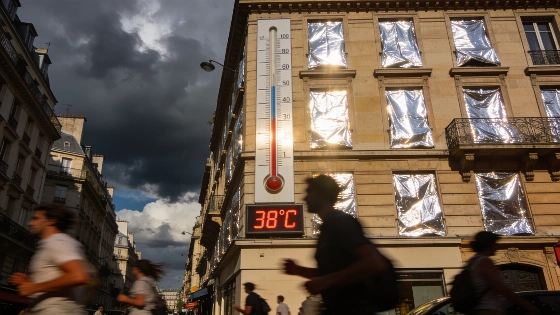
As Paris faces record-breaking heat, many residents are turning to aluminum foil on their windows for relief. Architect Vincent Parasie explains why this quick fix is only a temporary measure—and what actually helps keep homes cool during relentless heatwaves.
In Paris, where June 2026 has shattered temperature records with an average of 22.7°C—nearly 4 degrees above normal—residents desperate for relief have turned to a striking solution: covering their windows with aluminum foil and thermal blankets. The sight has become common across the city, but architect Vincent Parasie, who leads Atelier Parasie Arquitectes SLP in Barcelona, warns that this approach is more a symptom of urgency than a real answer to the problem.
Parasie describes the aluminum foil method as a stopgap—cheap, fast, and ultimately superficial. When applied to the outside of glass, foil can reflect some solar radiation before it enters the home, offering a modest reduction in indoor temperatures for rooms most exposed to the sun. However, he cautions that this is no substitute for genuine building improvements. The foil is not designed for outdoor use, meaning it can peel away or degrade quickly, especially under harsh weather conditions.
There are also trade-offs in comfort. Blocking windows with foil or thermal blankets cuts down on natural light and obscures views, both of which are important for well-being at home. Parasie emphasizes that while the method may provide short-term relief, it does nothing to address the underlying vulnerability of many homes to extreme heat.
Beyond Quick Fixes
According to Parasie, the real issue lies in how buildings are constructed and insulated. The thermal envelope—the combination of facades, roofs, and window systems—determines how quickly a home heats up and how well it retains cool air. Upgrading old windows to models with thermal breaks, double glazing, and solar control coatings can significantly reduce heat gain without sacrificing daylight. These improvements filter out much of the sun’s energy before it can raise indoor temperatures.
Traditional solutions, such as exterior shutters, blinds, or brise-soleil, remain highly effective—provided they are installed outside the glass. The logic is simple: stopping the sun before it penetrates the building is far more efficient than trying to cool a room after it has already heated up. Parasie notes that these measures, while sometimes overlooked, are proven to work in Mediterranean climates and beyond.
Options for Renters and Non-Renovators
For those who rent or cannot undertake major renovations, Parasie recommends maximizing natural ventilation before relying solely on air conditioning. The most effective strategy is to ventilate at night, when outdoor temperatures drop. This requires more than just opening a single window; creating a cross-breeze by opening windows on opposite sides of the home, or using a fan to move stagnant air, can make a noticeable difference.
The widespread use of aluminum foil in Paris highlights a growing reality: many urban homes are not built to withstand the intensity of modern heatwaves. While foil may offer a brief respite, it cannot replace proper insulation, exterior sun protection, or well-designed windows. As climate extremes become more common, the need for lasting solutions is only becoming clearer.
Practical home fixes often attract creative approaches, as seen in other household tips like the overlooked washer drawer feature that can impact laundry results—an issue explored in detail in this recent analysis.