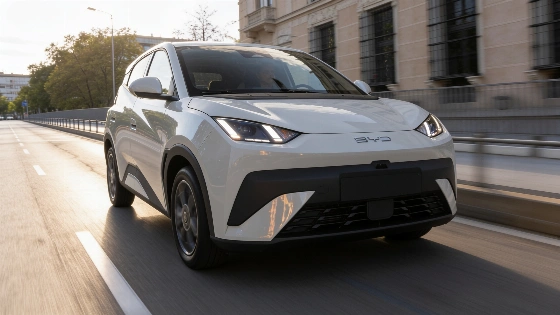
Electric vehicles can see up to 300 km difference in range depending on where they are driven. Urban routes allow for much greater efficiency than highways, thanks to regenerative braking and lower aerodynamic drag.
Drivers of electric cars often notice a striking difference in how far they can travel on a single charge, depending on whether they stick to city streets or venture onto highways. According to recent independent studies, the same electric model can deliver up to 300 kilometers more range in urban settings compared to motorway driving—a gap that surprises many new EV owners.
This contrast is rooted in how electric propulsion systems interact with real-world conditions. Unlike petrol or diesel vehicles, which tend to be most efficient at steady highway speeds, electric cars thrive in stop-and-go city traffic. The reasons are both mechanical and physical, and they add up to a significant advantage for urban commuters.
Regenerative Braking: Turning Stops into Power
One of the most important factors is regenerative braking. Every time an electric car slows down—whether by lifting off the accelerator or pressing the brake—the motor switches roles and acts as a generator. This process converts some of the vehicle's kinetic energy back into electricity, which is then stored in the battery. In city driving, where frequent stops are the norm, this system is constantly at work, helping to stretch every kilowatt-hour further. In contrast, combustion engines simply lose this energy as heat through the brakes.
Low-Speed Aerodynamics: Less Drag, Less Drain
Aerodynamic resistance is another key player. At urban speeds, the force of air pushing against the car is relatively minor, so the motor doesn't have to work as hard to maintain momentum. On highways, however, aerodynamic drag increases exponentially with speed. At 120 km/h, the energy needed to overcome air resistance rises sharply, causing the battery to deplete much faster. This explains why long motorway journeys can dramatically reduce an EV's real-world range.
Efficiency at Low Speeds
Electric motors are inherently more efficient than combustion engines, converting a much higher percentage of stored energy into motion. While petrol and diesel engines typically waste two-thirds of their fuel as heat, electric motors can use nearly all the electricity from the battery for propulsion. Crucially, this efficiency remains high even at low speeds, unlike combustion engines, which often operate outside their optimal range in city traffic.
No Idling Losses
Another urban advantage is that electric cars consume almost no energy when stationary. At red lights or in traffic jams, the motor simply shuts off, drawing power only for auxiliary systems like air conditioning or infotainment. Combustion engines, by contrast, continue to burn fuel even when the car isn't moving, steadily eroding efficiency in congested conditions.
Instant Torque and Smooth Acceleration
Electric motors deliver maximum torque from a standstill, allowing for brisk, efficient acceleration without the need for gear changes or high engine revs. This not only makes city driving smoother but also reduces mechanical losses compared to traditional engines. In urban environments, where frequent starts and stops are unavoidable, this characteristic helps keep energy consumption in check.
Highway Driving: Where Efficiency Drops
The picture changes dramatically on highways. At constant high speeds, opportunities for regenerative braking are rare, and the motor must continuously overcome both rolling resistance and significant aerodynamic drag. With little chance to recover energy and a steady demand for power, the battery drains much faster, slashing the car's effective range.
This is why official range tests for electric vehicles include both city and highway cycles, aiming to provide a realistic picture of what drivers can expect in different scenarios. As highlighted in a recent analysis of electric SUVs, such as the Mercedes GLC 400 EQ 4Matic, real-world range can fall well short of laboratory figures, especially on long motorway trips. For more on how specific models perform in real conditions, see this review of Mercedes' electric SUV's travel credentials: how the Mercedes GLC 400 EQ 4Matic redefines long-distance electric travel.
Context and Practical Takeaways
For drivers considering an electric vehicle, understanding these dynamics is crucial. Urban commuters stand to benefit the most from EV technology, enjoying lower running costs and greater range than those who regularly drive long distances at high speeds. It's also worth noting that battery performance can be affected by temperature extremes, and that real-world range will always depend on driving style and conditions. As charging infrastructure continues to expand across Spain and Europe, the practical advantages of electric cars in city environments are likely to become even more pronounced.