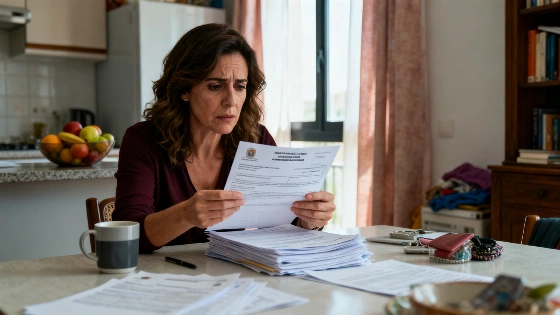
An Error in Employment History Can Cost Hundreds of Euros in Pension. Incorrectly recorded periods of employment can lower future pensions, even for those who have worked continuously. This issue especially affects people with part-time jobs. New regulations allow employment records to be recalculated, but only if the error is detected in time.
A single incorrectly recorded period in your employment history can result in a significant loss of pension benefits. Those who worked part-time for years are particularly vulnerable: until recently, their service time was calculated differently than that of full-time employees, which impacted their pension payouts upon retirement.
Since October 1, 2023, a new rule has been in effect in Spain: now, periods of part-time work are counted as full days when calculating service time, provided the right to a pension arises after this date. This change is enshrined in Article 247 of the Ley General de la Seguridad Social, as updated by Real Decreto-ley 2/2023. The key point is not just how many years you worked, but how exactly these periods are reflected in your employment record.
Who risks losing their pension
For many years, the inequitable system for recording part-time employment especially affected those who worked with breaks, changed employers, or reduced their hours to care for children or relatives. As a result, even with significant actual service time, some days might not have been fully counted, reducing the chances of receiving a decent pension.
Women were among the most affected: they were more likely to work part-time than others. The new reform partly addresses this imbalance, but only if all periods of service are correctly reflected in official documents. Mistakes in dates, missing contracts, or incorrect entries can mean that years of work simply won't be counted.
What has changed for part-time employment
Now, every working day, even a part-time day, counts as a full day of service. However, this does not mean an automatic increase in your pension: the amount you receive still depends on your contribution amount, retirement age, and other factors. It is important to understand that the pension calculation is based not only on the number of years, but also on the total sum on which contributions were paid.
You can check your employment history online via the Seguridad Social services. If you find errors—for example, periods of part-time work not included or recorded incorrectly—you should seek advice and submit a request to correct the data. This is especially relevant for those whose employment record consists of many short or incomplete contracts.
How to avoid unpleasant surprises
Experts recommend that you do not put off checking your employment history until you reach retirement. Even if it seems that all periods are recorded, it is worth carefully reviewing dates, contract types, and registration periods. If in doubt, seek assistance from a specialist or a Seguridad Social office.
A similar issue with formal criteria and their impact on a career occurs in other fields, for example, the story of a Madrid construction worker who faced new requirements in the labor market, shows how bureaucratic details can influence even experienced workers' careers.
What you need to remember
The old rule of 'half-time job — half-day of service' is no longer relevant. Now, periods of part-time employment are counted in full, but only if they are correctly documented. Checking and promptly correcting errors is the only way not to lose years of service and avoid a reduction in your pension.
According to Talent24h, the reform has already helped many people recalculate their service record and increase their future benefits. However, responsibility for data accuracy lies with the employee: only they can spot mistakes in time and ensure they are corrected.