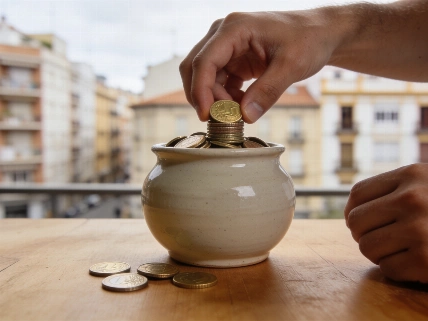
Bank of Spain Advises Keeping Cash at Home: Optimal Amount Named. The Bank of Spain recommends that residents keep between 70 and 100 euros in cash at home. This advice is related to risks of digital outages and the declining number of ATMs. For many, cash remains a primary means of payment.
The Bank of Spain has officially recommended that citizens keep a small amount of cash at home—between 70 and 100 euros per person. This measure is deemed necessary amid the rise of digital payments and a reduction in the number of ATMs across the country. The agency emphasizes that despite the popularity of mobile transfers and banking apps, cash remains the main payment method for most Spaniards.
According to the Bank of Spain, 67% of the country’s residents continue to use cash as their primary payment tool. This is especially true for the elderly, people with disabilities, and those living in small towns where digital services are not available to everyone. On the 'Herrera en COPE' program, it was discussed that a move to a fully cashless economy could create new barriers for vulnerable groups.
In the past two years, about 8,000 ATMs have disappeared in Spain—a 20% reduction, leaving around 37,000 now. This is felt most acutely in rural areas, where people must travel to nearby towns just to withdraw small amounts of cash. In some countries, such as Hungary, there is a law requiring ATMs to be installed in every locality to avoid such problems.
Experts warn that complete reliance on digital systems carries risks. Sweden is cited as an example, where after major outages the authorities required shops to accept cash. In the event of a cyberattack or technical issues, the country could be paralyzed within minutes. This is why the Bank of Spain recommends keeping a cash reserve for unforeseen situations.
The future of cash is also being actively discussed in the banking sector. As noted by 'Herrera en COPE', digitalization has not driven traditional money out of everyday life. Moreover, the reduction in the number of ATMs and the rise of digital services are increasing digital inequality. Similar trends are seen in other European countries, where banks are changing the terms for clients and boosting cross-sales, as has recently happened with one of the largest banks — Deutsche Bank has accelerated fundraising on new deposits.
For reference: cash in Spain is officially recognized as legal tender, and refusal to accept it is only possible in exceptional cases. In recent years, authorities and financial organizations have discussed the balance between digital innovations and the accessibility of traditional services. According to the European Central Bank, Spain is among the EU countries with the highest level of cash usage. This is attributed both to residents' habits and to the specific features of regional infrastructure.