Many drivers believe topping up air conditioning gas is routine, but experts insist it should rarely be necessary. Mechanics explain why refrigerant loss signals a problem, not normal use, and what symptoms to watch for.
When summer temperatures rise, the debate among drivers often comes down to two camps: those who rely on their car’s air conditioning without hesitation, and those convinced that rolling down the windows is better for their wallet. Yet, as mechanics point out, the reality is more nuanced than most people think.
According to Juan José, a specialist in automotive climate systems, the widespread belief that air conditioning gas needs regular recharging is simply incorrect. “Normally, you should never have to recharge the gas in your air conditioning system. It doesn’t get used up unless there’s a leak,” he explains. The system is designed to be completely sealed, so the refrigerant only changes state within the circuit—it doesn’t evaporate or disappear under normal conditions.
When the AC stops cooling effectively, it’s not because the gas has been ‘used up’ through regular operation. Instead, mechanics say this is a clear sign of a leak or another technical issue. Typical symptoms include a gradual loss of cooling power, the AC only working at high engine speeds, or difficulty starting the system. Sometimes, oily residue may appear around the connections, which can indicate a leak, though it’s not exclusive to air conditioning problems.
Juan José also clarifies that while the amount of refrigerant doesn’t affect the airflow, it does determine how cold the air gets. If a leak is suspected and a recharge is needed, only a qualified technician should handle the process. “It should never become a routine maintenance task,” he emphasizes.
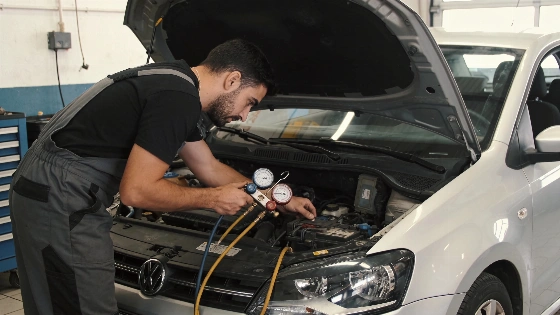
To diagnose these issues, mechanics use pressure gauges to measure the system’s internal pressure. It’s also essential to know which type of refrigerant your vehicle uses, as each has specific properties and requirements.
Preventive care can help avoid most problems. As noted by RACE, Spain’s leading motoring association, it’s advisable to have the air conditioning system checked every two years, run it periodically during winter, or at least activate it for five minutes each month to keep the system in good condition.
For context, modern automotive air conditioning systems are engineered to be maintenance-free regarding refrigerant, unless a fault occurs. Regular recharging is not only unnecessary but may mask underlying leaks that could worsen over time. Addressing leaks promptly helps protect both the vehicle’s performance and the environment, as refrigerant gases can be harmful if released.
As the summer heat intensifies, understanding how your car’s AC works—and when it truly needs attention—can save money and prevent bigger headaches down the road.