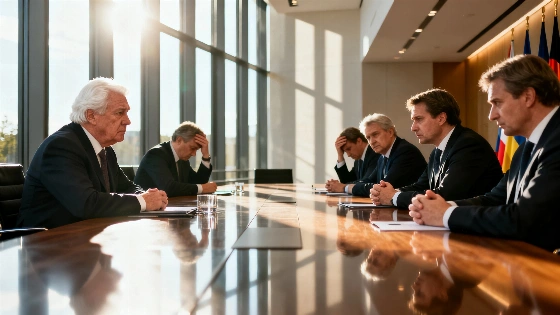
Berlin and Brussels Reject Schröder as Mediator on Ukraine. Germany and the European Union have refused to consider former Chancellor Schröder as a mediator in negotiations on Ukraine. Authorities view Moscow’s initiative as unserious and see no grounds for trust.
Germany and the European Union have categorically rejected Russia's proposal to appoint former German Chancellor Gerhard Schröder as a mediator in talks on Ukraine. The Kremlin's initiative, announced against the backdrop of Russian setbacks on the front lines, was viewed in Brussels as an attempt to impose its own terms on Europe and sow discord within the EU.
Reaction of European leaders
Senior European Union officials, including the head of foreign policy, Kaja Kallas, stated that Russia cannot unilaterally determine who negotiates on behalf of Europe. According to her, it would be unwise to trust Moscow in this matter, and Schröder himself, who for many years defended the interests of Russian state companies, cannot be considered a neutral figure. The foreign ministers of Sweden and Estonia took a similar stance, emphasizing that the EU already has official institutions and authorized representatives for dialogue with the Kremlin.
Berlin also stressed that Moscow’s offer is part of a hybrid strategy aimed at dividing Europe. The German government believes that any negotiations are possible only if conditions change on Russia’s side, and the first step should be a genuine and lasting ceasefire.
Possible alternatives and discussion within the EU
Against the backdrop of Schröder being ruled out as a potential mediator, other candidates are being discussed in Brussels. Among them are former and current Finnish presidents Sauli Niinistö and Alexander Stubb, as well as the Deputy Prime Minister of Luxembourg Xavier Bettel and the President of Germany Frank-Walter Steinmeier, whose term is ending soon. According to diplomatic sources, involving Steinmeier is being considered as a possible counterbalance to the Kremlin's proposal.
Schröder's office declined to comment on his willingness to act as a mediator. In Germany itself, the former chancellor has long faced criticism for his close ties to Vladimir Putin and his work in Russian energy companies. After the war in Ukraine began, pressure on him increased, but attempts to expel Schröder from the Social Democratic Party have not succeeded.
Debate within Germany
Opinions in the German parliament are divided regarding Moscow's initiative. Representatives of the conservative opposition believe that any proposals for negotiations with Russia are not credible without concrete steps from the Kremlin, especially a ceasefire. In their view, such initiatives are used to create the appearance of dialogue and do not lead to real results.
At the same time, some deputies from the Social Democratic Party are urging not to dismiss the idea of Schröder's mediation automatically, but to carefully assess its reliability. They insist that Europe must participate in negotiations on Ukraine on an equal footing with the US and Russia, and that no opportunities for dialogue should be missed if they do not contradict Ukraine's interests.
Context and implications for Europe
The Kremlin insists that it is the European governments who must take the first step to resume contact, since they were the ones who broke off dialogue after the war began. Against the backdrop of new sanctions against Russia and ongoing hostilities, the issue of mediation has become particularly acute. In recent months, there have been growing calls in Europe for independent participation in negotiations, reflecting a broader trend toward finding new formats for dialogue with Moscow.
Domestic disputes over Schröder’s candidacy are reminiscent of other sharp conflicts in European politics. For example, recently in Catalonia, competition between two far-right parties has intensified, which has also become a subject of discussion in the EU — more on this can be found in the article about the growing influence of radical forces in Catalonia.