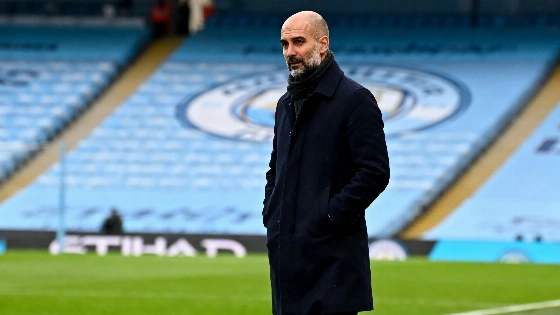
Guardiola concludes a decade of dominance with Manchester City. Over 10 years, Pep Guardiola has taken Manchester City to the top of English and European football. The club set records, won 17 trophies, and changed the style of play in the country.
Manchester City closes a decade under Pep Guardiola with achievements that have transformed not only the club itself but also the entire English Premier League. From 2016 to 2026, the team won 17 trophies, including six English league titles, three FA Cups, five League Cups, and, for the first time in the club’s history, the Champions League, the UEFA Super Cup, and the Club World Cup. Such a level of domestic domination had previously been demonstrated only by Manchester United during the Alex Ferguson era.
Guardiola became the most successful manager in the club’s history, overseeing a record number of matches and securing 55% of all trophies since Manchester City’s founding in 1880. His arrival in Manchester brought not only a new coaching philosophy but also a large-scale squad overhaul. Key players such as Ederson, Kyle Walker, Bernardo Silva, and Aymeric Laporte were signed in the early seasons. Phil Foden, in particular, progressed from a youth academy product to one of the team’s leaders.
Guardiola’s early steps in England were marked by controversies and tough decisions. The most high-profile was parting ways with captain and goalkeeper Joe Hart, who did not fit into the new playing model. He was replaced by Claudio Bravo, but the first season ended without trophies and raised questions about the coach’s strategy. However, in the very next year, City became the first club to reach 100 points in a season and set records for wins, goals scored, and points gap over their rivals.
Domestically, Manchester City under Guardiola achieved a unique 'domestic treble'—winning all three major national tournaments in a single season. Success in Europe did not come immediately: the team was eliminated several times at the quarterfinal and semifinal stages of the Champions League, but in 2023 finally claimed the most important club trophy in Europe, defeating Inter in the final. By that time, Erling Haaland had joined the attack, allowing the team to reshape its play and make it even more effective.
Guardiola's influence extended beyond a single club. His approach to tactics and player development became a model for many English teams, including women's and youth squads. Formations featuring false nines, goalkeepers actively involved in build-up play, and versatile wing-backs became widespread in the country. According to RUSSPAIN, such changes in playing style became noticeable even at the regional league level.
However, against the backdrop of these successes, the club faced serious accusations. In 2023, the Premier League charged Manchester City with 115 financial violations covering the period from 2009 to 2018. This cast doubt not only on Guardiola's first seasons, but also on the financial model of the club, which is linked to its owner from Abu Dhabi. Disciplinary proceedings began in 2024, but as of 2026, no final decision had been reached. The club denies all charges, but questions about the transparency of its success remain.
Manchester City's impact on European football is comparable to how a historic church in Andalusia was transformed into a cultural center—both examples show how innovation and investment can change traditional institutions. More about similar projects can be found in the article on the renovation of San Lorenzo Church in Úbeda.
For reference: Manchester City was founded in 1880, and before coming to England, Pep Guardiola worked with Barcelona and Bayern. During his tenure in Manchester, the club became the first in history to win four league titles in a row. Guardiola’s influence on English football is noted not only by the number of trophies but also by his transformation of the culture of the game in the country.