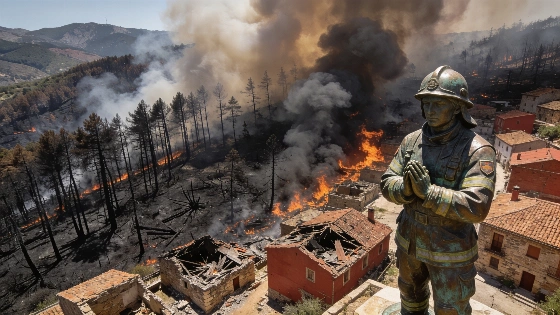
Casavieja, a town of about 1,500 in Ávila province, saw forests and residential areas suffer widespread damage. The blaze surged down from the mountains over the weekend, reviving painful memories of the 2005 fire that killed firefighter Javier Tirado. The 2026 fire began near Burgohondo in mid-July and affected 20 municipalities across the Alberche-Tiétar area. In Casavieja, reports put the burned area at 92% of the municipality. The fire was not fully extinguished for more than two months.
On Tuesday, ash covered the field as residents surveyed damage to woodland and homes, especially in the upper part of town. A local park containing a memorial to Tirado escaped the worst, but surrounding pine forests were charred and still smoldering. With its wooden animal benches and a statue of a firefighter fox, the park remains a reminder of past tragedy and the community’s continuing vulnerability.
The 2005 incident remains vivid for many. Three separate fires merged in nearby ravines, sending a wall of flames toward Casavieja. Tirado, a young Andalusian member of the La Iglesuela brigade, was killed when a rock loosened by the fire struck him as he and his team tried to stop its advance. That same summer, 11 firefighters died in the Guadalajara wildfire. Local resident Vicente Rodríguez recalls both the sculptor who created Tirado’s memorial and another firefighter, Habidis, who lost his home in the 2026 fire and has continued fighting flare-ups in the area.
Despite the work of emergency crews, the fire’s intensity overwhelmed initial containment attempts. On Saturday, firefighters were forced to retreat as the blaze became unmanageable. A local campsite was also damaged. Melted aluminum and shattered glass littered the grounds, where prefabricated homes had collapsed. Gas canisters exploded in the heat. Warning signs and water pipes were destroyed. Civil Protection teams and local young people voiced frustration with the response, saying official firefighters were absent on Friday and that additional aerial support might have helped.
Among those affected was Rolando Rollán, who found a scorched bell from his brother’s plot at the ruined campsite. Although much of the fire was brought under control, burning stumps and smoldering debris remained. Some areas near the pool survived, but much of the site was reduced to ash and twisted metal. The community’s sense of loss is compounded by memories of earlier tragedies and concern that lessons from 2005 were not fully heeded.
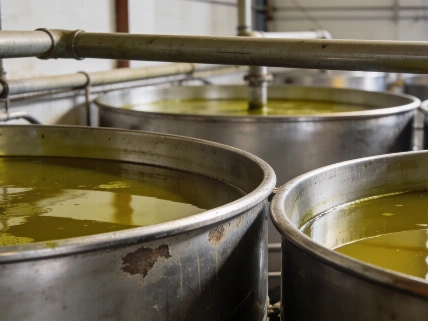
The consequences extended beyond burned woodland and buildings. On 4 October, intense rain washed ash and debris into water-capture infrastructure, triggering a drinking-water crisis in Casavieja. The water turned black, and the town was reported to be the worst affected among Casavieja, Piedralaves and Mijares, where more than 4,000 people faced disruption to potable-water supplies. The crisis continued for at least two weeks; Socialist regional legislator Carmen Iglesias said Casavieja had gone 16 days without potable water. Homes were affected, as were a school and an elderly-care residence. A health centre was also among the facilities hit. The mayor said the regional government had carried out emergency work to bring water from another intake.
The recovery response includes emergency water measures and longer-term work on the burned terrain. The Junta de Castilla y León established a recovery structure through Government Council Agreement 135/2026, dated 30 July. Planned work includes infrastructure repairs and spreading wood chips and straw. Crews will build contour barriers, along with check dams and small reservoirs. Burned timber will be removed or processed to reduce runoff and erosion, while supporting soil and vegetation recovery. A separate €90,000 emergency intervention was allocated to address water-supply problems in Casavieja and Piedralaves. The Junta later approved a further €600,000 for a 10-month restoration programme. It includes erosion-control structures and measures to manage ash and runoff, as well as firefighting water points. The work also covers pasture establishment, forest thinning and planting.
The response has also become a political dispute over preparedness and timing. Iglesias argued that the Junta took nearly two months to begin effective work and said the ash-related risks should have been anticipated after the fire. María González Corral, the regional environment, housing and land-planning minister, said the Junta had acted from July and rejected the criticism, arguing that other authorities also had responsibilities. She said the government was pursuing “rapid and effective solutions” to restore potable-water supplies as soon as possible. The disagreement has not changed the immediate reality for affected residents: fire-damaged catchments and dirty pipelines left communities without safe tap water.
Wildfires remain a persistent threat in Spain, particularly in rural and mountainous areas such as Ávila. In Casavieja, the 2026 fire’s reach across 20 municipalities and the subsequent contamination of water infrastructure showed how the impacts can continue long after flames are brought under control. The memorial to Tirado recalls the risks faced by firefighters. The town’s water emergency has added another measure of the lasting cost for residents.