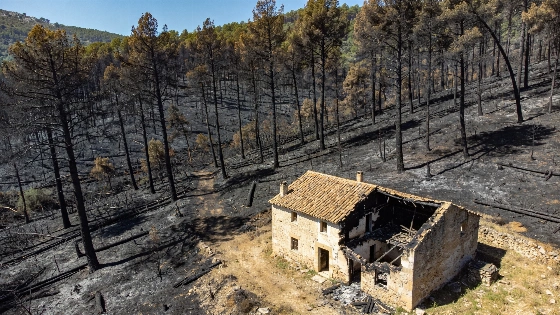
An out-of-control wildfire in Sentmenat, Barcelona province, prompted authorities to order residents in seven urbanizations and scattered settlements to stay indoors. The fire broke out early in the afternoon, affecting around ten hectares of mainly forested land. It continued to advance, producing secondary outbreaks that complicated firefighting efforts.
At 16:00, Civil Protection activated the ES-Alert system, sending urgent notifications to mobile phones in the affected areas. Residents of El Farell, Can Gurri, Sant Sebastià de Montjamor, el Balcó de Sant Llorenç, Sant Feliu del Racó, Nord de Castellar del Vallès, and Can Vinyals were told to stay indoors, keep doors and windows closed, and follow instructions from emergency services. The fire's unpredictable spread raised concerns about the safety of people living near the advancing flames.
Firefighters deployed around one hundred personnel, 36 ground vehicles, and 12 aircraft to contain the blaze. The fire service said the fire moved at speeds of up to 850 meters per second during its initial phase, making containment especially challenging. Crews prioritized the left flank because it was driving the fire's advance and had already produced several secondary ignition points.
The emergency call came in at 14:21 via the 112 hotline. It reported a fire that began in a cultivated field before spreading into the surrounding forest. Provisional data from Rural Agents indicated that approximately ten hectares had been affected, mostly in forested areas. The rapid escalation prompted local and regional authorities to act to reduce risks to residents and property.
The incident follows a pattern of severe wildfires in Catalonia in recent years, with high temperatures and dry conditions increasing their frequency and intensity. A major blaze near La Bisbal d'Empordà also forced lockdowns in several towns, as detailed in this report on previous wildfire emergencies in Catalonia. The Sentmenat fire highlighted the region's vulnerability to fast-moving fires, especially during periods of elevated fire risk.
ES-Alert, used in Spain for urgent public warnings that include wildfire confinement and evacuation instructions, was introduced in 2023. Data from Protección Civil reported by Newtral.es recorded 587 activations nationwide between the system's launch and 19 October 2026. Fires accounted for 276, or 47%, while Catalonia recorded 221 activations, the highest total among Spain's autonomous communities. The analysis also counted 352 activations in 2026 through 19 October and said July included the three busiest days since the system began operating: 16 alerts on 20 July, 14 on 24 July, and 28 on 25 July.
After a year marked by major wildfires and flooding, Catalan president Salvador Illa said the Generalitat would review ES-Alert and create a new preventive-warning category. He defended the system's usefulness and promised improvements, information from La Vanguardia. Separately, Sentmenat was among 30 municipalities taking part in a Protección Civil course on prevention, coordination, and communication during climate-related emergencies involving rain, flooding, and fires.
Wildfires remain a impressive concern for Catalonia, particularly during the summer months, when vegetation is dry and winds can spread flames quickly. Emergency teams are continuing their efforts, while authorities urge the public to stay informed and follow safety instructions.