Four decades after the Chernobyl disaster, large mammals are reclaiming the exclusion zone. New research links this resurgence to strict limits on human activity, not to the absence of radiation’s effects. Scientists now see Chernobyl as a unique natural laboratory.
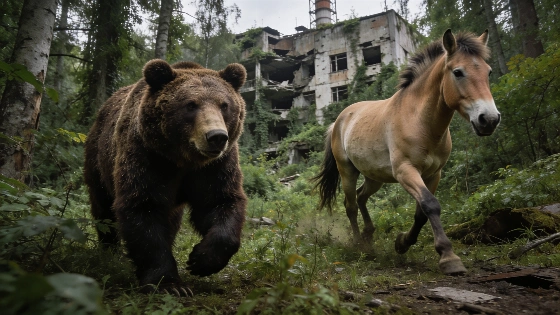
In the forests and meadows surrounding the Chernobyl nuclear plant, camera traps have captured a striking resurgence: brown bears, Eurasian lynxes, moose, and even the rare Przewalski’s horse now roam freely through a landscape once defined by catastrophe. According to a study published in Proceedings of the Royal Society B, the diversity and abundance of large mammals in the Chernobyl Exclusion Zone now surpass those in many other parts of northern Ukraine.
Led by ecologist Svitlana Kudrenko, the research team monitored terrestrial mammals across protected and unprotected areas in 2020 and 2021. Their findings are clear: the exclusion zone and the neighboring Drevlianskyi reserve recorded not only the highest number of animal detections—over 19,800 out of 31,200 total—but also a greater likelihood of encountering species such as lynx, elk, red deer, and the iconic wild horses. The data suggest that the near-total absence of people, rather than any benefit from radiation, is the decisive factor behind this ecological recovery.
Human Absence Drives Recovery
After the 1986 disaster, a 30-kilometer exclusion zone was established, forcing the evacuation of around 200,000 people and leaving vast tracts of land essentially untouched by agriculture, traffic, or settlement. Kudrenko’s team found that these conditions—large, connected, and genuinely off-limits to humans—have allowed sensitive species to reclaim territory. The return of apex predators and rare herbivores echoes similar patterns seen in other abandoned landscapes, such as the emergence of hybrid animals in Fukushima following its own nuclear accident.
While the study does not suggest that radiation is harmless, it highlights how the removal of human pressures can rapidly reshape ecosystems. The findings align with other European projects, such as the use of European bison to manage vegetation and boost biodiversity, and with the challenges faced in Spain’s Doñana wetlands, where invasive species have altered the ecological balance, as detailed in this report on the red swamp crayfish.
Radiation’s Lingering Impact
Despite the visible wildlife comeback, the legacy of Chernobyl’s radioactive fallout remains. The International Atomic Energy Agency notes that strontium-90 and cesium-137 persist in the soil and water, with long half-lives that continue to shape the environment. Some species show biological responses to this exposure: for example, a 2022 study found that tree frogs in the exclusion zone have developed much darker skin, likely due to selective pressures favoring melanin’s protective properties against ionizing radiation. Similarly, recent research on Chernobyl’s wolves has identified molecular markers of stress and possible immune system adaptations after decades of chronic exposure.
A Living Laboratory for Conservation
The Chernobyl zone now serves as a rare, large-scale experiment in what happens when human activity is abruptly halted. Kudrenko’s study underscores that legal protection alone is not enough—real ecological recovery depends on the size, connectivity, and strict enforcement of human exclusion. This lesson is increasingly relevant as conservationists debate how best to restore and manage wild spaces across Europe.
Yet, the Chernobyl case is not evidence that nature is immune to nuclear disaster. The area remains contaminated, and the long-term effects on animal health and genetic diversity are still being studied. What is clear is that, in the absence of people, even the most damaged landscapes can become havens for wildlife—though not without lasting scars.