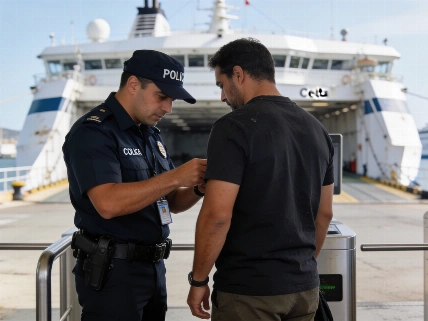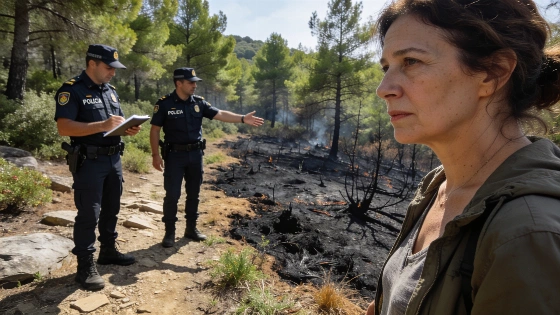
A 56-year-old woman has been arrested by Mossos d'Esquadra in connection with a wildfire that burned 1,200 square meters of forest in Llançà, Girona. Police say the fire broke out on August 2 in the Can Ras area, a wooded zone where the woman was reportedly camping. Investigators concluded that she started the blaze when she lit a fire to cook, an act considered reckless under Catalan law.
The fire broke out around five in the afternoon and quickly spread through dry undergrowth before emergency services contained it several hours later. Mossos d'Esquadra and the Agents Rurals launched a joint investigation, gathering evidence at the scene that pointed to human negligence. The Agents Rurals’ remit covers forest-fire prevention and surveillance, including investigations into where and how fires begin. The woman, who has a record of previous offenses, was identified and detained in La Jonquera on August 11 as the suspected perpetrator of a forest-fire crime.
Authorities emphasized that from March 15 to October 15, lighting a fire in forested areas of Catalonia is prohibited without explicit authorization, regardless of its purpose. The restriction aims to reduce wildfire risk during the region’s driest months, when even small flames can spread rapidly. The Llançà fire affected about 0.12 hectares, but its limited size does not lessen the enforcement significance of an unauthorized flame in a forested area.
The incident took place during a severe wildfire season across Catalonia. Regional figures for June through September 2026 recorded approximately 450 fires and nearly 5,000 hectares burned. President Salvador Illa said more than 80% of fires in the campaign had been brought under control in time and burned less than one hectare, showing the importance of early detection and rapid response.
Recent weeks have also brought wildfire emergencies elsewhere in Spain, with evacuations and firefighting efforts stretching resources in several regions. For example, urgent relocations were ordered in Los Ángeles de San Rafael and Catí as fires reached critical levels, as detailed in this report on mass evacuations in Segovia and Castellón. The Llançà case highlights how individual actions can prevent ignitions, alongside the work of patrols and emergency crews.
Forest fires remain a persistent threat in Spain, particularly in Mediterranean areas where climate conditions meet human activity. Catalonia’s fire ban is part of efforts to limit accidental ignitions, while enforcement depends on compliance and investigations into suspected violations. As the summer season continues, authorities are urging residents and visitors to follow fire-safety rules to protect communities and natural habitats.