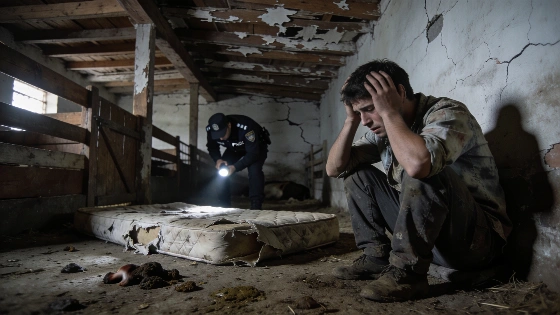
Police arrested a 24-year-old caretaker after €18,000 was stolen from the rural estate in Fuenlabrada, Madrid, where he worked. The theft brought to light the extreme exploitation and inhumane conditions he had endured, and prompted a police investigation into both the worker and the estate owner over the theft and alleged labor violations.
Information from police reports, the man, originally from Morocco, had been living and working on the property without a contract or fixed salary, and lacked proper accommodation. He was forced to sleep in a stable among animals and their waste, with only a dirty mattress and an outdoor shower for basic hygiene. His daily routine reportedly involved 15-hour shifts without rest or legal protections.
The theft came to light when the estate owner, a 55-year-old Spanish national, reported that €15,000 in bills and €3,000 in coins had disappeared. The cash had been hidden in plastic bags at the back of a wardrobe. Security camera footage showed a man leaving the property with two bags hanging from a bicycle, leading police to focus on people with inside knowledge of the estate.
Officers quickly identified the caretaker as the basic suspect. In the days after the theft, he was seen wearing branded clothing and sporting a new tattoo, and had sent money to his family abroad. Police also discovered that he had tried to destroy evidence by burning the plastic bags that had held the stolen cash, then hiding the remains behind a flowerpot.
During his arrest, the worker showed officers the filthy stable where he slept and described the lack of any formal employment arrangement. He also revealed the squalid conditions he had endured. Authorities then detained the estate owner, charging him with violating labor rights and facilitating illegal immigration.
Spanish law treats labor-rights offenses and human trafficking as distinct crimes, though the same circumstances can raise questions under both. Article 311 of the Criminal Code covers the imposition of working conditions that restrict workers’ legally recognized rights through deception or abuse of necessity. Article 177 bis addresses trafficking for exploitation, including forced labor and servitude. Applying it requires evidence of the relevant conduct and circumstances, such as coercion, deception, control or abuse of vulnerability. The reported lack of a contract and poor accommodation are relevant to labor conditions, while the legal classification depends on the full facts of the case.
The national enforcement picture offers wider context for irregular employment. The 2025 annual report of Spain’s Labour and Social Security Inspectorate recorded 206,339 infringement findings, with proposed penalties totaling €858.27 million, reportedly 58.6% more than in 2024. Agriculture, livestock and fishing accounted for 53,556 inspection actions, 7,516 detected infringements and €39.6 million in proposed sanctions. These nationwide figures describe inspection activity across the sector, not findings about the Fuenlabrada estate.
The inspectorate’s reported 2025 activity also included 1,206,028 inspection actions at 427,495 workplaces and 306,609 companies, with detected infringements affecting 1,030,183 workers. In Zamora, provincial figures reported 16 trafficking victims in 2025: men working under coercive conditions in agricultural or livestock operations. The cases show that rural labor exploitation is part of a broader enforcement and protection challenge across Spain.
The case adds to ongoing concerns about labor exploitation in Spain's agricultural and rural sectors, where undocumented workers can be vulnerable to abuse. Similar issues have surfaced in other regions. In Navarra, a former official considered low-wage work after legal troubles, another example of the precarious situations many workers face.
Spanish authorities have increased scrutiny of labor conditions in recent years, particularly in sectors where informal employment is common. The Ministry of Labor has launched initiatives to combat illegal hiring and improve oversight, but enforcement remains a challenge, especially in isolated rural areas. The investigation into the alleged theft and labor violations puts the worker’s reported treatment alongside separate questions about the estate owner’s responsibility under labor and criminal law.