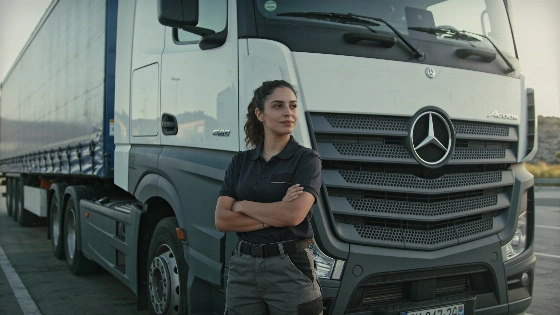
At 25, Xaima has already made two bold career moves. After working in hospitals and care homes during the pandemic, she reached a breaking point and decided to change paths entirely. Within half a year, she secured her truck-driving licenses and took on her first international route from La Coruña, entering a profession many still see as a male preserve.
Speaking on the podcast Rutas de Éxito, Xaima recalls her initial hesitation about entering what she calls a “man’s world.” That feeling quickly faded when she discovered the freedom and purpose she found behind the wheel. The truck cab, she says, became her real passion.
Yet the job brings serious challenges. Xaima is frank about the toll of long, demanding workdays. She believes excessive hours are a major reason younger people avoid the sector. “We work too much,” she says, arguing that a 12-hour daily limit, with no more than nine hours actually driving, would make the job sustainable. Weekends, for her, are non-negotiable time off.
Retirement is another concern. Xaima points to the stark difference between aging in a sedentary office job and spending decades at the wheel of a heavy vehicle. She also faces persistent gender stereotypes, including comments about her clothing, but insists professionalism is not defined by appearance.
Her ambition is clear: one day, she wants to buy her own truck. She admits it’s a tough goal, but for now she’s focused on gaining experience and enjoying the journey. Xaima encourages other women to consider trucking, stressing that “this isn’t about men or women; it’s just a job.” She warns, but, that those drawn only by the salary will be disappointed.
Xaima feels her pay matches the demands of her routes, but says feeling valued matters more than the paycheck. Other young women in Spanish transport share her approach, including Andrea García, who is also breaking barriers in the industry. Her story was highlighted in recent coverage of Spain’s youngest female truck driver.
Information from elespanol motor, Xaima’s story reflects a wider debate about working conditions and generational change in Spanish transport. The sector faces a shortage of young drivers, while calls for better hours and more inclusive workplaces are gaining momentum. For now, Xaima finds stability and a sense of safety in her cab, even during long nights on the road. It’s a small but impressive victory in a field slow to change.