Spain is running out of truck drivers as the job loses its appeal for young people. Ainoa Blasco, 30, explains how long hours, low pay, and constant pressure are pushing her generation away.
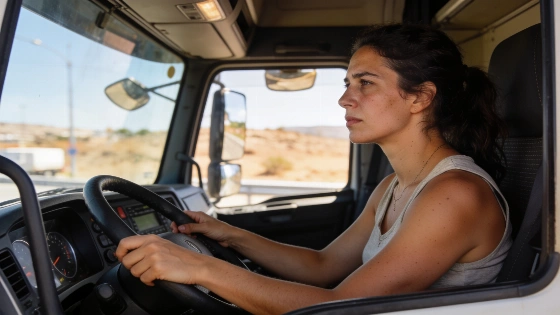
“Forget it, you are not going to earn anything.” That’s how Ainoa Blasco, a 30-year-old truck driver from Valencia, sums up the reality of her job. The old idea that trucking meant easy money is gone. For many, it’s a profession in crisis.
Truck driving in Spain no longer offers financial security. The Confederación Española de transporte de mercancías says the country is short 30,000 drivers, and that gap could quadruple by 2028. The average driver is nearly 55 years old, and fewer than 3% are under 25. New recruits are rare, and the reasons are obvious. The International Road Transport Union (IRU) reports that in 2025, Europe as a whole faced a 13% driver shortage—about 502,000 unfilled jobs—showing this is a continent-wide problem.
Spain's Ministry of Transport has approved a €9.6 million program granting €30,000 exit payments to 320 self-employed veteran drivers, mainly those aged 63 and above or with disabilities, to encourage retirement and address the workforce crisis.
Blasco has spent three years on the road. She describes a routine that wears people down. “There are no schedules,” she says. “One day you start at two in the morning, the next at ten at night. Your body sleeps when it can—even if that means trying to rest at midday in Seville with temperatures above 40 degrees.”
The pay does not match the sacrifice. National routes pay around €2,000 a month, but Blasco says some drivers earn less. She compares her situation to her father’s: twenty years ago, he made €1,000 when life was cheaper. Now, wages have barely changed, but the demands have grown. According to Indeed, the average base salary for a "chófer de camión" in Spain is about €1,687 per month, based on 990 reported salaries. It’s not hard to see why young people are staying away.
The physical strain is constant. Blasco has irritable bowel syndrome, which makes it nearly impossible to eat well on the road. Unpredictable stops and poor food options only make things worse. The mental toll is just as heavy. “Fifteen-hour days, endless solitude—no one teaches you how to handle that,” she says. The pressure to deliver faster is always there. Still, Blasco refuses to risk her life for a deadline: “If they want it there sooner, they can hire a helicopter.”
The deadline for veteran drivers to apply for the government exit payment is October 19, 2026, and only those already on the final recipient list will receive the funds. This measure reflects official recognition of the labor crisis and a strategic push to accelerate generational turnover in the sector.
Ministry of Transport and Sustainable Mobility
Responsibility is always present. One mistake can be disastrous, and the pressure to keep pushing never stops. The crisis is not just about numbers—it’s about the loss of dignity and safety for drivers.
Spain’s transport sector is not alone. Recent changes to road infrastructure, like the high occupancy lanes in Madrid, have already frustrated drivers, as reported earlier. For truckers, the stakes are higher: without urgent reforms, the supply chain is at risk. Recent reports show the sector is stagnating, with logistics and transport job growth slowing to nearly zero by July 2026. The industry’s limits are clear.
As elespanol motor notes, the warning signs are everywhere. An aging workforce, flat wages, and poor working conditions have made trucking a last resort. The future depends on whether policymakers and employers are willing to face these problems directly. If not, Spain’s roads will keep emptying—and the effects will reach far beyond transport. Meanwhile, the European Union is looking abroad, with pilot programs discussed in September 2026 to recruit drivers from Morocco and Egypt as part of wider efforts to address the shortage across Europe.