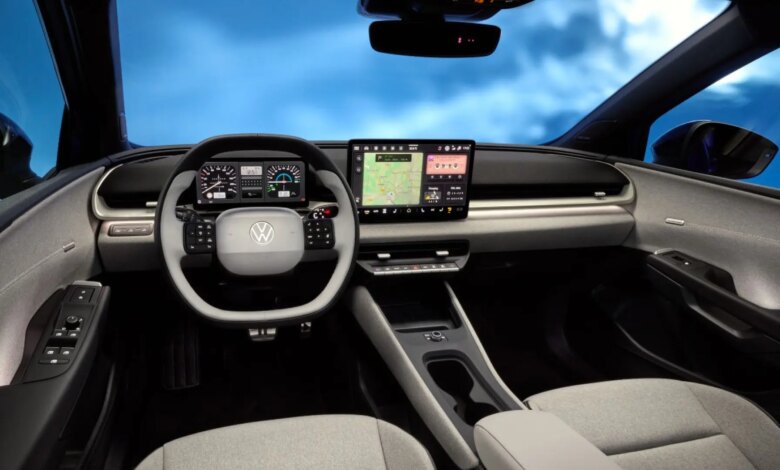
In recent years, car interiors have become unrecognizable: digital dashboards, huge screens, minimalist design, and the near-total disappearance of traditional buttons. It seemed like the future had arrived—the idea that every car function could be controlled with a simple swipe across a touchscreen. But reality proved more complicated: drivers and experts began to notice that the sleek design was bringing new risks and inconveniences. Manufacturers, responding to criticism, have started rethinking their approach and are bringing back what once seemed outdated—physical buttons.
Today, the market presents a surprising paradox: on one hand, automakers keep pushing innovative technologies, yet on the other, they are reintroducing controls once seen as relics of the past. This isn’t just about nostalgia—it’s an attempt to strike the perfect balance between convenience, safety, and contemporary style.
Technology and its limits
Over the past decade, car manufacturers have actively phased out physical buttons, replacing them with touchscreens. This trend is especially vivid with brands like Tesla, where nearly every function is managed from a single large display. Climate control, navigation, multimedia, even suspension settings—all are now accessible through on-screen menus.
It looked impressive: a minimalist interior, no unnecessary details, and constant software updates. However, it soon became clear that beneath this simple exterior lay a serious problem: to perform even a basic function, the driver had to take their eyes off the road, search through menu options, and make several taps. Not only is this inconvenient, but it’s also dangerous.
Safety at risk
Road safety studies have shown that interacting with touchscreens requires more time and attention from the driver than using traditional buttons. According to various industry associations, performing even basic tasks on a screen takes between one and two and a half seconds. In that short period, a car traveling at 100 km/h covers more than 50 meters—during which the driver is essentially not paying attention to the road.
Unlike touch panels, physical buttons allow for intuitive operation—drivers rely on memory and feel rather than sight. This reduces the risk of distraction and increases safety. Unsurprisingly, many drivers have started to demand the return of familiar controls, and manufacturers are responding to these requests.
A hybrid approach
In response to criticism, car manufacturers have begun introducing hybrid solutions: large screens remain, but they’re now paired with physical buttons and dials for the most essential functions—volume, temperature, and radio station selection. This approach has already been adopted by Volkswagen, Ford, Audi, and other major brands.
The emergence of hybrid control panels is not just a compromise, but a deliberate step toward user convenience. Manufacturers acknowledge that not every task is best handled through a touchscreen interface. Buttons are returning where they matter most, while screens are used to display complex information and navigate additional features.
The screen is here to stay
Despite the comeback of buttons, digital displays are not going anywhere. They have become an integral part of the modern car: maps, apps, cameras, and personalized dashboards are all impossible without a screen. In fact, the integration of smartphones and new services only strengthens this trend.
The real question is how to best allocate functions across different types of controls. While fully autonomous vehicles are still a dream, drivers must keep their focus on the road. Simple, intuitive buttons support this, while screens make the ride more informative and comfortable.
RUSSPAIN notes that Volkswagen, Ford, and Audi are among the world’s largest car manufacturers, actively driving innovation in ergonomics and safety. These companies have repeatedly set trends in automotive design and continue to shape industry standards. Their solutions often serve as benchmarks for other brands, while their experiments with control interfaces spark discussions among experts and car enthusiasts worldwide.