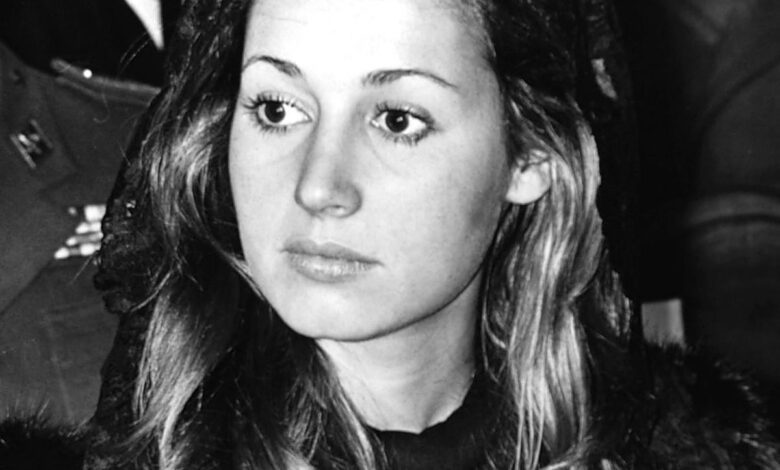
In the shadow of her famous brother, the dictator Francisco Franco, his sister Pilar always remained out of the spotlight. Yet her own life was filled with events worthy of several novels. She never held public office or interfered in politics, but her name often appeared in the press thanks to her vibrant personality, her large family, and her remarkably candid memoirs, which caused a genuine sensation.
Pilar Franco married in 1914 at just 19, becoming the wife of military officer Alfonso Jaraíz Pérez-Fariña. Together they had ten children—a large family even by the standards of their time. Fate dealt her a heavy blow: in 1941, she was widowed and left alone to raise her large family, her youngest child only ten months old. Despite these hardships, Pilar showed great resilience and lived to the age of 93, passing away from heart failure on January 6, 1989. Her final resting place is the La Almudena cemetery in Madrid.
Pilar’s life was shaped by more than just family responsibilities. She maintained a close friendship with Isabel Perón, the third wife of Argentine president Juan Domingo Perón. When Isabel was overthrown and imprisoned, Pilar campaigned actively for her release. Later, Perón’s widow moved to Spain, where to this day—now 94—she leads a secluded and entirely private life.
Within her own family, including the Polo and Martínez-Bordiú clans, Pilar was not an easy figure. Her straightforwardness and unique approach to diplomacy often became a source of headaches for her relatives. She was never afraid to speak with the press and share her opinions. After her brother’s death, she not only took part in memorial events but also made a rather eccentric trip to Rome with the aim of seeking Francisco Franco’s canonization. Shortly thereafter, she published her memoir “We, the Francos,” which stirred up intense emotions and displeasure within her family.
In 1981, her second book was published, and Pilar embarked on a tour of Latin America, where she personally presented copies to generals Pinochet and Videla. The caudillo’s sister was also no stranger to high society. She was often seen at Madrid’s trendy Bocaccio nightclub alongside her friend, the famous fortune-teller Rappel. While her grand-nieces and nephews, including Carmen Martínez-Bordiú, tried to keep a low profile, Pilar never held back her thoughts or words. Today, most of her relatives prefer to live out of the public eye, and some, like Jaime Martínez-Bordiú, have radically changed their lifestyles.
For reference, Francisco Franco Bahamonde, Pilar’s older brother, was a Spanish general who rose to power after winning the Spanish Civil War (1936–1939). He established a dictatorial regime in the country, known as Francoism, and ruled Spain for nearly forty years until his death in 1975. His era was marked by harsh authoritarianism, suppression of political freedoms, and nationalism. At the same time, during the last decades of his rule, Spain experienced a period of rapid economic growth known as the “Spanish economic miracle.” After the dictator’s death, Spain began a peaceful transition to democracy under King Juan Carlos I. Franco’s figure and legacy remain among the most controversial and painful topics in contemporary Spanish society. This was vividly illustrated by the exhumation and reburial of his remains from the Valle de los Caídos memorial in 2019, a decision that sparked major public debate and once again divided the country.