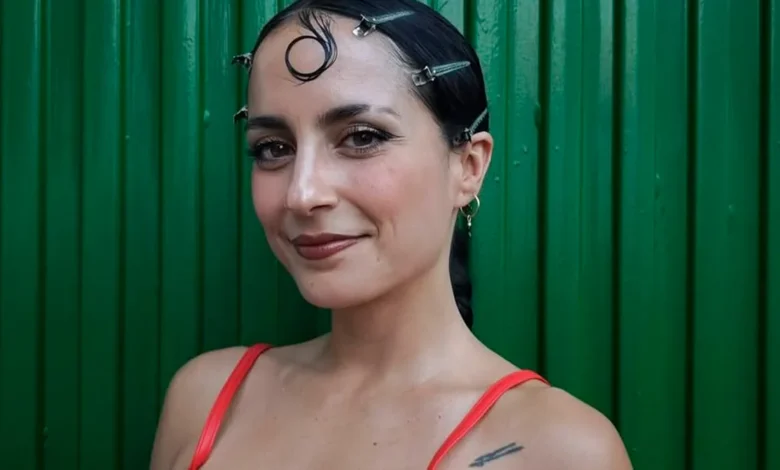
This year, Spain’s music scene found itself in the spotlight thanks to the unexpected breakthrough of Rosalinda Galán. Her performance at Benidorm Fest 2026 with the song ‘Mataora’ was more than just another appearance—it was a challenge to established norms. The artist from Los Palacios boldly blends copla with electronic beats and openly embraces her roots, turning her personal story into part of the country’s cultural dialogue.
Rosalinda Galán, who turned thirty this year, is unafraid to go against the grain. Her path began in a musical family where copla filled the air from an early age, and her first steps on stage were marked by shyness and an inner struggle. Yet, it was precisely these qualities that laid the foundation for her future achievements. At nineteen, she decided to move to Madrid to study acting, and ever since, she has continued to surprise audiences with her creative versatility.
In the music industry, Rosalinda has already made a name for herself as the ‘electric coplera’—her own description of a style where tradition meets innovation. She has released five singles and a mini-album, each filled with social relevance and personal experiences. Her work is more than just music; it’s an attempt to rethink a woman’s role in a genre long considered strictly conservative.
Personal and professional
In interviews, the singer has repeatedly emphasized that her success is the result of long inner work and the support of her loved ones. Family and friends have become her backbone during moments of doubt, while years of therapy have helped her find harmony within herself. Rosalinda speaks openly about the importance of being honest with oneself and not being afraid to stand up for one’s beliefs, even when they go against public opinion.
Her acting career is also progressing rapidly: appearing in a film by Javier Fesser, starring in ‘Zoe,’ and a stage production dedicated to María Jiménez all confirm her versatility. Rosalinda refuses to confine herself to a single genre or role, making her one of the most intriguing figures of the new generation of Spanish artists.
The theme of feminism holds a special place in her work. Rosalinda believes that copla has always been the voice of the unheard, and today she carries on this tradition, giving it a modern sound. In the song ‘Mataora,’ she tells the story of Carmen—a woman whose fate has become a symbol of the struggle for the right to be oneself. This approach resonates deeply with the audience and prompts a fresh perspective on familiar themes.
Bold statements and her position
Rosalinda Galán is not afraid to speak out on the most pressing issues. Her support for RTVE’s decision to withdraw from Eurovision due to Israel’s participation sparked widespread debate. The singer admits that the situation in the Middle East deeply concerns her, and she cannot remain indifferent when it comes to human rights. This outspoken stance earns her both supporters and detractors, further fueling public interest in her persona.
In this context, it’s worth recalling how the Spanish show business scene has often seen conflicts arising from creative disagreements and the fight for individuality. For example, the recent dispute between Estrella Morente and Rosalía, when one artist accused the other of disrespecting tradition, became a major talking point. More details about the behind-the-scenes of this conflict can be found in the feature about the confrontation between two stars of flamenco and pop music.
Rosalinda, however, prefers not to engage in open conflicts, but to prove her point through her art. Her songs become a manifesto for those seeking new meanings in old forms, and her stage personas reflect an inner freedom. This is her main contribution to contemporary culture: she doesn’t just sing—she changes the rules of the game.
Rosalinda Galán represents a new generation of artists for whom the boundaries between genres and roles no longer exist. Her journey is a testament to how personal courage and loyalty to one’s roots can inspire thousands. In the coming years, her name will undoubtedly become even more prominent, and her work will continue to spark both debate and admiration.
Rosalinda Galán was born in 1996 in Los Palacios, Seville province. From an early age, she was surrounded by music and folklore, which shaped her artistic path. In addition to her music career, Rosalinda is actively involved in acting, participating in both film and theater. Her style boldly fuses traditional copla with modern electronic sounds, setting her apart from other performers. Through her work, she addresses themes of social justice, feminism, and personal identity, making her one of the most prominent figures on the contemporary Spanish scene.