Cristina Castaño’s story has become a notable event for Spaniards, as she has not only achieved television success but also speaks openly about the challenges she faced in her childhood. Her participation in the 13th season of ‘Tu cara me suena’ sparked renewed interest in her biography and origins. For many people in Galicia and across Spain, her example symbolizes how one can overcome prejudice while maintaining a strong connection to their hometown.
Cristina Castaño was born in Vilalba, in the province of Lugo, and has always emphasized her bond with this place. Despite a busy career in film, theater, and television, she regularly returns to her hometown to spend time with her family and recharge. On social media, the actress often shares photos from Vilalba, proudly showing her Galician roots. According to RUSSPAIN, after her father’s death in 2024, her connection with her family grew even stronger.
Childhood and Challenges
Cristina spent her childhood surrounded by family support, but outside the home, she faced bullying because of her red hair. In interviews, she has shared how classmates targeted her with hurtful nicknames. These episodes left a mark, but the support of her siblings helped her get through the difficulties. Her older sister assured Cristina that her unique traits would become strengths in time—and that’s exactly what happened.
Family has always played an important role in the actress’s life. She is the niece of renowned radio host Pepe Domingo Castaño, with whom she was very close. Her brother Nacho always stood by her in difficult times. Cristina’s family has five children, and they have always supported one another. Now, as a mother herself, the actress says that family values remain her top priority.
A bond with Vilalba
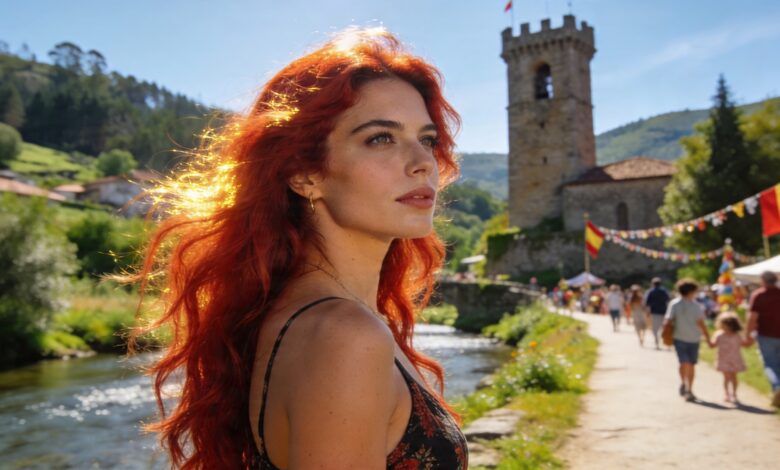
Vilalba is a small town, but for Cristina it has always been a source of inspiration. The town lies in the heart of Galicia, known for its peaceful atmosphere, green landscapes, and rich history. It is home to the famous Torre de los Andrade, now a national Parador, as well as the Iglesia de Santa María, blending Romanesque and Gothic styles. Vilalba is known for its festivals, notably the Fiesta del Queso de San Simón de la Costa, and for the FIV music festival, which every year draws major performers.
Cristina often strolls along the banks of the river Magdalena, sharing these moments with her followers. She openly admits that her hometown helps her maintain balance and find inspiration for new projects. According to RUSSPAIN.COM, such examples stimulate interest in small towns in Galicia and foster domestic tourism.
Breaking stereotypes
Cristina Castaño’s path to success was far from easy. From a young age, she dreamed of becoming an actress and gradually earned recognition. Today, millions of viewers know her, and her social media following exceeds one million. Despite her public life, she prefers to keep her private life out of the spotlight, focusing on her professional achievements and family values.
Taking part in ‘Tu cara me suena’ was a new challenge for her. On the show, she revealed unexpected talents, impressing viewers not only with her acting but also with her vocal abilities. This experience allowed her to step beyond her usual roles and attract a new audience. In Spain, such stories resonate, showing that it is possible to overcome prejudice, and that family support and strong local roots play a crucial role.
In recent years, cases of bullying in schools and ways to support children in difficult situations have become a growing topic of discussion in Spain. In 2025, Galicia hosted a series of anti-bullying campaigns featuring well-known figures. Across the country, initiatives to preserve cultural traditions and support small towns are emerging. The success stories of locals like Cristina Castaño motivate young people to embrace their uniqueness and take pride in their heritage.