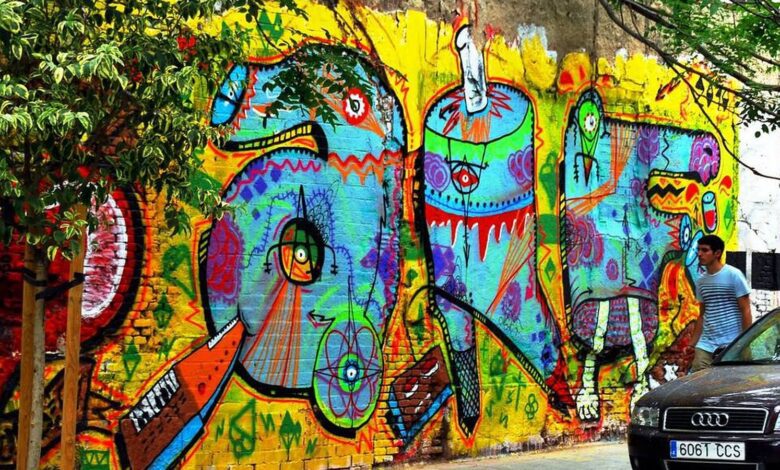
In the very heart of Madrid, nestled between the bustling neighborhoods of Atocha and Lavapiés, lies a street that few people walk from end to end. At first glance, it appears unremarkable, but after just a few steps, the city’s hustle and bustle fades away, giving way to a world where contemporary art bursts into the open. Here, along a stretch of just 600 meters, there are more galleries than in some European capitals, and street artists have turned building facades into true works of art.
Anyone who happens to wander here finds themselves at the epicenter of creative energy. Galleries line up one after another, inviting visitors inside, while new graffiti and installations appear on walls and doors. The street’s atmosphere is constantly evolving: today there’s an exhibition of young artists, tomorrow—a large-scale performance or a children’s workshop. This is a place where art is not just displayed—it becomes part of the neighborhood’s daily life.
The City’s Open-Air Museum
Since the early 2000s, the street has undergone a true transformation. Once lined with ordinary residential buildings, its low rents and proximity to major museums attracted the first gallerists. Gradually, the street evolved into Madrid’s unofficial hub for contemporary art. Today, it is home to around 15 galleries, each offering something unique—from minimalist installations to bold experiments in form and color.
Street artists hold a special place here. Their works appear suddenly, sometimes vanish after just a few days, but always spark strong emotions. Locals are used to their building entrances being adorned with vibrant murals, while unexpected art installations pop up on the sidewalks. This street is a true open-air museum where everyone can find something to their taste.
A vibrant art scene
Galleries here do more than just exhibit art—they become spaces for dialogue between artists, collectors, and everyday passersby. Most spaces are free to enter, and exhibitions change so frequently that even regular visitors struggle to keep up with new trends. One gallery might showcase geometric abstractions, another features provocative performances or unexpected collages.
Venues like F2 Galería, Espacio Mínimo, and the legendary Helga de Alvear—now preparing to close after decades in business—stand out in particular. It’s common to come across artists at work or chat with curators who eagerly share insights about new projects. The street’s atmosphere encourages experimentation and bold ideas, turning every visit into a small adventure.
A haven for locals
But it’s not just art that makes this street unique. Tucked behind unassuming gates in one of the courtyards lies a green oasis—a community garden created by local residents. What was once an abandoned lot is now a gathering place for everyone, from students to retirees. The garden hosts workshops, children’s parties, communal dinners, and even small concerts.
The garden has become a symbol of resistance to urban development and a showcase for how residents can shape social and creative spaces themselves. Inspired by examples from Berlin and London, people in Madrid transformed a wasteland into a thriving cultural hub where everyone contributes. This spot brings generations together and serves as a reminder that a city is defined not just by its buildings but by the people who call it home.
Freedom and creative energy
Unlike large museums where everything follows strict rules, here there’s a spirit of freedom. You can walk into any gallery, talk to the artists, and sometimes even take part in creating the art itself. The street has become a platform for experimentation, where new names and ideas emerge and spread across Spain and beyond.
Every visit here is a chance to witness art being born, to feel the city’s pulse, and to become part of something greater. There’s no room for boredom or routine: the street lives its own life, with something new happening every day. For those seeking inspiration or just a break from the everyday, this place is a true discovery.
In case you didn’t know, Calle Doctor Fourquet in Madrid has become a hotspot for contemporary art lovers in recent years. The galleries here regularly participate in international fairs and exhibitions, while also providing support for emerging artists. The Esta es una Plaza community garden is recognized as one of Spain’s leading examples of urban greening and cultural integration. The Lavapiés district, home to this street, is renowned for its multicultural atmosphere and vibrant creative scene.