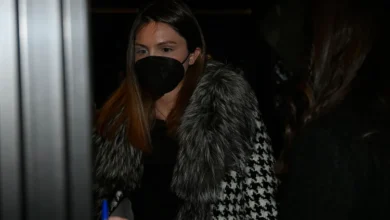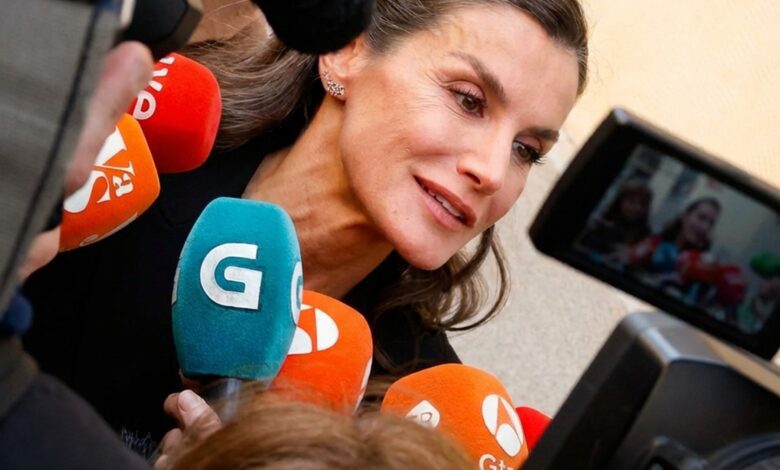
The death of Fernando Onega was a significant event for Spanish society, particularly among those involved in journalism and politics. His farewell at Madrid’s Casa de Galicia brought together not only media representatives and politicians, but also members of the royal family. The presence of Queen Letizia attracted special attention: she attended without her husband, accompanied instead by her assistant Marta Carazo. Upon arrival, Letizia openly told journalists about the impact Onega had on her life and why she felt it was her duty to attend this farewell.
According to Divinity, the Queen recalled that even while studying at the Faculty of Journalism at the Complutense University of Madrid, the name Fernando Onega was, for her and her classmates, a symbol of professionalism and an unreachable standard. The radio, where Onega spent most of his career, had always been a part of her daily life. However, a personal connection developed later, when Letizia met the journalist’s daughter, Sonsoles Onega, while they were colleagues in the editorial office. It was this friendship that made Fernando not only a professional role model for her, but also the father of a close friend.
Personal and Professional
Letizia emphasized that her visit was not only a tribute to the profession but also a show of support for the Onega family. She noted that King Felipe was unable to attend due to official duties in Seville, but she was confident he would have also wanted to pay his respects to the journalist. According to the Queen, her presence was a way to support Sonsoles and her family, as well as to remind everyone of the importance of journalism and the role of radio in shaping public opinion.
During the ceremony, Letizia repeatedly recalled how radio and journalism shaped her worldview. She mentioned that many phrases and stories she heard on air still resonate with her today. In her view, figures like Onega help shape not only the professional community, but also the values of an entire generation. In this context, her words that she “came to embrace a friend and honor a master” sounded especially heartfelt.
The role of family and traditions
After a brief conversation with the press, Letizia went inside to meet with Sonsoles, her brother and sister, and the journalist’s widow. On her way out, she declined to comment on the family’s condition, suggesting that journalists approach them directly. This gesture was seen as a sign of respect for the Onega family’s privacy. In Spanish society, such behavior from the Queen is often viewed as an example of tact and empathy, which only amplified public interest around the event.
Interestingly, the participation of royal family members in such ceremonies always draws media attention. Recently, the spotlight was on another member of the dynasty—Infanta Sofia, who supported Spanish teachers and headed a charitable foundation, marking a significant step for the entire family. You can learn more about her initiative in the feature on Sofia’s new role and her support for education.
A tribute to the maestro
As Divinity reports, the queen did not hide her emotions as she recalled the influence Onega had on her life and on journalism in Spain. She emphasized that people like him deserve not only professional recognition but also personal gratitude. On that day, many of the journalist’s colleagues and friends shared similar memories, highlighting his contributions to radio and public discourse. Letizia’s presence became a symbol of respect not only for the individual, but for the profession she herself once chose.
Fernando Ónega is one of the most renowned Spanish journalists of recent decades. His career began in regional media, but he soon became a prominent national figure, working for major radio stations and newspapers. Ónega was known for his analytical style and his ability to explain complex political processes in simple terms. His articles and broadcasts often sparked public debate, and colleagues praised his honesty and integrity. Even after stepping back from active journalism, Ónega continued to shape public opinion, remaining an authority for new generations of professionals.