Ancient Conflicts: New Insights into Neanderthals
In the Third Goyet Cave, located in present-day Belgium, archaeologists have discovered unique remains that shed light on the grim history of the Neanderthals. Recent research has allowed scientists to reconstruct the tragic events that unfolded some 41,000–45,000 years ago. Analysis of the bones revealed that the victims were women and children, and the remains bear signs of violence and butchering.
Previous evidence of cannibalism among Neanderthals has been found in various regions across Europe. However, until now, it was not possible to determine the makeup of the victims’ group and the circumstances of their deaths with such precision. The new study not only identified the gender and age of the deceased but also revealed that they were not related to each other.
Research Methods and Key Findings
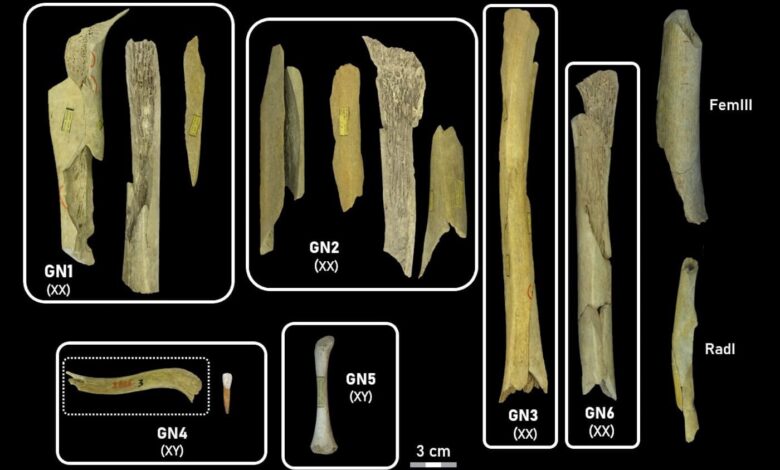
To study the remains, specialists used a range of modern techniques: paleogenetic analysis, isotopic studies, and morphometry. Radiocarbon dating helped determine the age of the bones, while virtual reconstruction made it possible to piece together scattered fragments. Thanks to these technologies, researchers identified six individuals: four adolescent and adult women, one child, and one infant.
The bones show clear butchering marks, characteristic of fresh injuries. Researchers concluded that the bodies were dismembered, the flesh removed, and the bones broken open to extract marrow. Some fragments were used as tools for working stone implements, confirming a practical rather than ritual purpose for these actions.
The victims’ origins and aspects of their lives
Isotope analysis revealed that the deceased were not local. Their diet differed from that of Neanderthals in neighboring caves, suggesting they were outsiders. All the victims had similar eating habits, indicating they belonged to a single group of newcomers or several collectives with similar lifestyles.
Morphometric data show that women in this group were short and had a delicate build. Their bones indicate low physical activity, setting them apart from other Neanderthals and contemporaneous humans. Statistical analysis ruled out randomness in the demographic makeup of the victims.
Intergroup violence and competition for resources
The study’s findings indicate that in the late Pleistocene, there was intense competition between Neanderthal groups. Local inhabitants deliberately targeted the most vulnerable members of rival communities—women and children. This behavior may have been driven by territorial disputes or an attempt to weaken the demographic potential of competitors.
Traces on the bones, as well as the use of human remains as tools, confirm that this was a case of nutritional, not ritual, cannibalism. This discovery changes our understanding of social relations and the level of aggression among Neanderthals at the end of their existence.
The significance of the find for science
The Goyet Cave remains one of the key archaeological sites for studying late Neanderthals in Europe. New data offer fresh insight into the reasons for their disappearance, as well as their interactions with the environment and other groups. Scientists note that such cases of mass violence and cannibalism may not have been isolated, but rather part of a broader survival strategy in conditions of resource scarcity.
The discovery in Belgium highlights the complexity and multifaceted nature of ancient human behavior, as well as their capacity for fierce competition for survival. This research represents a significant contribution to our understanding of the evolution of human communities and their adaptation to extreme conditions.
In case you didn’t know, Neanderthals (Homo neanderthalensis) are an extinct species of ancient humans that inhabited Europe and parts of Western Asia from approximately 400,000 to 40,000 years ago. Their remains were first discovered in the mid-19th century in the Neandertal Valley in Germany, which gave the species its name. Neanderthals were characterized by a robust build, large skulls, and prominent brow ridges. They were well-adapted to the cold climate of the Ice Age, used complex tools, knew how to make fire, and likely possessed the beginnings of speech. In recent decades, genetic research has revealed that Neanderthals interbred with the ancestors of modern humans, and traces of their DNA remain in many people across Eurasia. The reasons for their extinction are still debated among scientists; possible factors include competition with Homo sapiens, climate changes, and epidemics. The Goyet Cave in Belgium is considered one of the most important sites for Neanderthal remains, and new discoveries continue to shed light on their lives and disappearance.