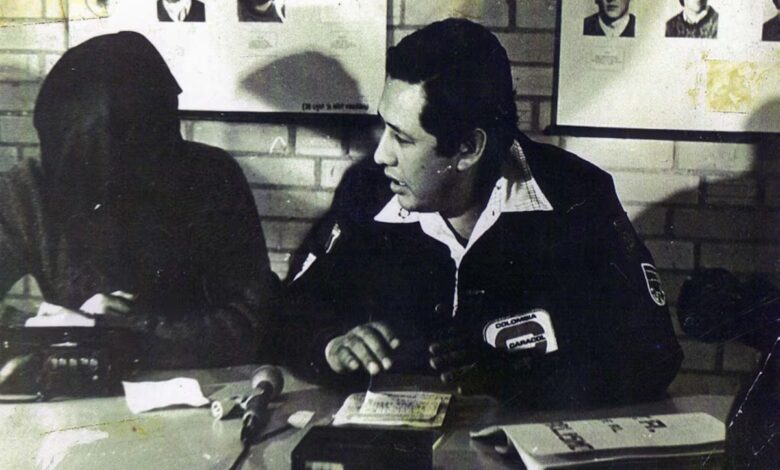
In 1976, Europe witnessed an event that could have changed perceptions of one of the most secretive organizations of the 20th century. A Colombian film crew met with members of the armed Basque movement ETA for the first time. The camera captured masked individuals sitting around a table with a Latin American journalist. It was a historic moment: just three years after the high-profile assassination of Spanish Prime Minister Luis Carrero Blanco, one of the men involved in that attack appeared on camera.
However, this historic meeting never reached the public. The footage, which could have been a sensation, was banned from broadcast by order of Colombia’s highest authorities. The reason was diplomatic pressure from Spain, which was just beginning its path after the death of Francisco Franco. Decades later, only a few seconds of silent video remain from the interview—and many unanswered questions.
The Madrid bombing and ETA’s growing influence
December 1973 was a turning point for Spain: in the center of Madrid, an explosion killed Carrero Blanco, who had just been appointed president of the country. The operation, code-named ‘Ogro’, brought international notoriety to ETA. Just a year later, in the heart of the capital, the organization carried out another attack—a bombing at a café on Plaza Puerta del Sol, claiming 13 lives.
Amid these events, a journalist from Colombia, working on a new television project, traveled to Europe. His program aimed to show viewers not only exotic locations and geography, but also real political conflicts. Among his reports were meetings with Soviet leaders at the Moscow parade, an interview with the brother of the US president, and a visit to China after the establishment of diplomatic relations. However, it was his encounter with Basque militants that proved to be the most dangerous and mysterious.
A secret meeting on the Franco-Spanish border
The interview with ETA members took place in a small settlement between Bayonne and Saint-Jean-de-Luz on the French side of the Basque Country (Pays Basque). The journalist arrived on site wearing a mask, while the organization’s representative acted as cameraman. The entire filming process was conducted under strict secrecy. Meanwhile, the journalist’s family was in Bruxelles, awaiting the end of his dangerous mission.
The TV program for which this material was prepared aired on the state channel but was produced by a private studio. On the day the episode was scheduled to be broadcast, it was abruptly pulled from the lineup. The management of state television explained that the order came directly from the presidential palace. The official reason: ‘promotion of a crime.’
Diplomatic pressure and the disappearance of the recording
At the time, the president of Colombia was Alfonso López Michelsen, who knew the journalist personally. However, according to the family’s recollections, the initiative to ban the show did not come from him, but from Spanish diplomats. Spain, going through a turbulent transition after the dictator’s death, was determined not to let such content reach the international audience. The Spanish ambassador to Colombia, appointed during Franco’s regime, took an active part in the negotiations.
As a result, just minutes before the broadcast was scheduled to air, the episode was pulled. The original recording was eventually lost, and all that remains in the archives are a few short, silent clips and a promotional video filmed weeks before the planned premiere. In it, the journalist proudly announced that his team had become the first in Latin America to interview those involved in the high-profile assassination attempt.
The unbroadcast report remembered
Today, half a century after Franco’s death, the story of the lost interview is once again drawing the interest of researchers and journalists. The national television archives of Colombia preserve only silent footage, while details of the meeting are reconstructed through family and colleagues’ recollections. The location, the talks, and the reasons why the recording disappeared remain subjects of debate.
In 1976, Spain was experiencing political turbulence: the country was just beginning its transition to democracy, Juan Carlos I had become the new king, and the government was led initially by Carlos Arias Navarro and later by Adolfo Suárez. In this environment, any mention of radical movements was seen as a threat to stability. That is why an interview that could have become an important historical record was banned and virtually erased from history.