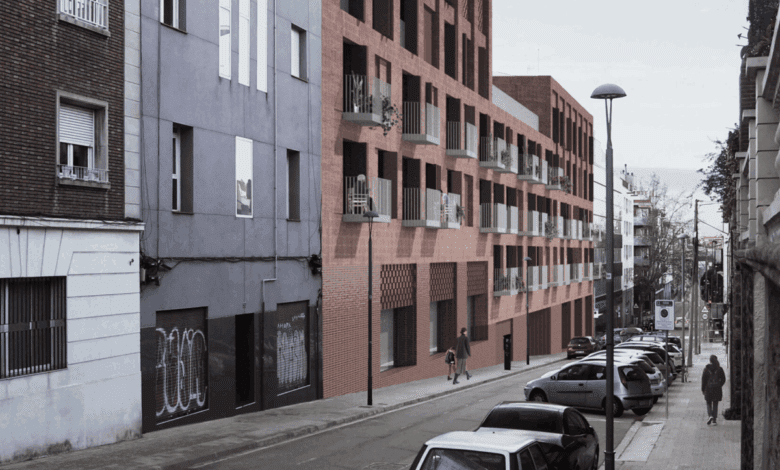
A major transformation is underway in the heart of Gràcia in Barcelona: an empty lot where the renowned Quirón clinic once operated will soon be home to dozens of senior citizens. City authorities have finally given the green light to a project that has been years in discussion, surrounded by rumors and expectations. Now, a modern residential complex will rise on Avinguda de la Mare de Déu de Montserrat, offering 83 apartments specially designed for older residents.
The total investment in this project is impressive: €15.7 million has been allocated solely for construction, and the overall budget approaches €17 million when all related expenses are included. The project is managed by the Institut Municipal de l’Habitatge i Rehabilitació de Barcelona, with Copcisa selected as the contractor. The work is scheduled to be completed in two and a half years, and city officials assure that, this time, there will be no delays.
The plans go beyond just apartments and envision a full-fledged complex with extensive infrastructure: there will be a round-the-clock support facility along with community spaces open to all neighborhood residents. This approach aims not only to ensure comfort for inhabitants, but also to integrate the new residence into the urban fabric, preventing it from becoming yet another isolated institution.
City strategy
Barcelona has long been searching for ways to increase the amount of affordable housing for seniors, especially in central neighborhoods, where real estate prices have traditionally been sky-high. The project on the former Quirón clinic site is part of this strategy. City officials are focusing on reimagining existing properties, as there is hardly any undeveloped land left in the city center. This approach not only saves space but also revitalizes long-forgotten corners of the city.
However, the path to realization was far from smooth. After the clinic closed, the site remained abandoned for a long time, with several attempts to start construction being postponed repeatedly. The reasons included bureaucratic delays, shifting priorities, and even a temporary halt to the project. Only after a new round of bidding was a contractor selected: this time, 14 construction companies expressed interest at once, which is unusual for a municipal project of this scale.
City officials openly acknowledge the huge demand for projects like this, and the level of competition among developers shows that the market is ready for change. Still, not all experts share the city council’s optimism. Some warn that even such large-scale developments won’t solve the problem of affordable housing for seniors unless there are systemic changes in city policy.
A social mission
The new residential complex is envisioned not just as a place to live, but as a space where seniors can remain part of urban life. It will offer adapted apartments, dedicated services, and even a special co-living area with staff support. Importantly, part of the infrastructure will be accessible to all neighborhood residents—this is designed to encourage integration and reduce social isolation.
City officials emphasize that the project will serve as a model for how urban resources can address demographic challenges. As Barcelona’s population ages rapidly, such initiatives are taking on growing significance. Beneath the appealing rhetoric, however, there is also calculated pragmatism: the city aims to keep older residents in the center, helping the district preserve its identity.
Nonetheless, the project has not been without criticism. Some residents worry these new homes for seniors could become a ‘ghetto’ for the elderly if real integration with the surrounding community is not achieved. City officials promise this will not happen, but only time will tell how successful the idea proves to be.
Economy and Competition
The financial aspect of the project raises as many questions as its social mission. Almost 17 million euros is a significant amount, even for Barcelona. Officials insist the investment is justified, describing it as a long-term contribution to the quality of life for residents. However, real estate experts point out that the cost per square meter in such municipal projects often exceeds that in the private sector.
Interestingly, 14 companies competed for the right to undertake this project. This highlights the strong appeal of such contracts for the construction industry. In an overheated Barcelona housing market, municipal contracts have become an enticing prospect. However, it remains to be seen whether high competition will drive costs down — or lead to attempts to cut corners on quality.
Authorities have promised strict oversight of the construction process and complete transparency in all procedures. Yet, Barcelona residents have seen bold promises remain just words on paper more than once. There is hope this time the project will not share the fate of other long-delayed developments.
The Future of the District
The construction of a new residential complex for seniors on the site of the former clinic is more than just another building project. It is part of a broader citywide strategy to revitalize central neighborhoods. City Hall is actively seeking ways to breathe new life into neglected corners of the city. In this sense, the project on Avinguda Mare de Déu de Montserrat could set an example for other Spanish cities.
Residents of the district still have questions: how will the transport load change, will there be enough infrastructure, and will the new building drive up rental prices in the area? So far, city officials have offered only general assurances, but experience shows that any changes in Barcelona spark heated debates and require constant oversight from the public.
Nevertheless, the very launch of this project demonstrates that the city is ready to evolve. And perhaps, initiatives like this will help Barcelona maintain its unique character amid rapid change.
For reference, Copcisa, the company selected to carry out this project, has long operated in the Catalonia market, specializing in major infrastructure and residential developments. In recent years, it has participated in the construction of several landmark complexes in Barcelona and other cities of the region. The Barcelona Municipal Institute of Housing and Renovation, in turn, is responsible for the development and management of social housing, as well as implementing innovative solutions in the city’s real estate sector.