The third day of the Spanish king’s visit to China was packed with events focused on the economy and support for national businesses. Felipe VI dedicated the final part of his trip to meetings with representatives of Spanish companies operating in China, highlighting the need for transparent and predictable conditions for investors.
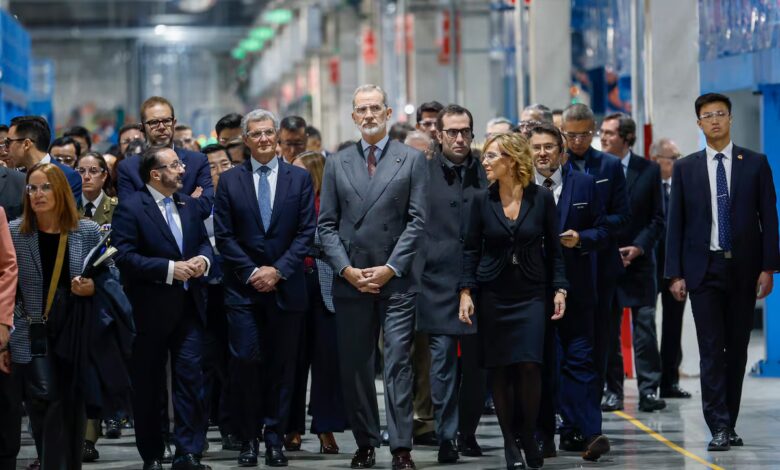
One of the key moments of the trip was a tour of the production facilities at Gestamp—a major Spanish company specializing in automotive components. Since 2007, the firm has been actively developing its projects in China, now boasting an impressive network of factories and research centers. Thanks to its partnerships with local companies, Gestamp is involved in manufacturing parts for electric vehicles, supplying both Chinese and European brands.
During the visit, the royal delegation learned about the state-of-the-art technologies used at the plant and met with the company’s management. Special attention was given to sharing expertise between the two countries and the new opportunities created for Spanish manufacturers by China’s booming electric vehicle market. Gestamp representatives noted that in recent years, technology transfer has become a two-way street, rather than just one-sided as it was in the past.
Spanish presence in China: challenges and opportunities
During the official events, Felipe VI also met with Chinese President Xi Jinping, where both sides reaffirmed their commitment to strengthening their partnership. New agreements were signed to boost cooperation across various sectors. The King highlighted that Spain is becoming an increasingly prominent player in the Chinese market and that Spanish companies are seen as reliable partners.
However, despite these positive trends, challenges remain. The European Union has voiced concerns over restrictions for foreign companies and competition from local manufacturers. In response, the EU introduced additional tariffs on electric vehicle imports from China starting in 2024—one of the key topics discussed during the meetings.
Cultural exchange and the role of the Spanish language
While the King toured industrial sites, Queen Letizia met with students at Beijing Foreign Studies University (Beiwai), where Spanish has been taught for over 70 years. The meeting took place in a warm atmosphere: students shared their stories, spoke about why they chose Spanish studies, and discussed their interest in Spanish culture. The university administration noted that the popularity of the Spanish language in China continues to grow and that proficiency in it is increasingly in demand.
At the end of their visit, the royal couple met with the Spanish community in Beijing. Felipe VI expressed his gratitude to fellow citizens who contribute to strengthening ties between the two countries—in business, science, education, and culture. He noted that it is precisely these individuals who shape Spain’s positive image abroad and help foster international dialogue.