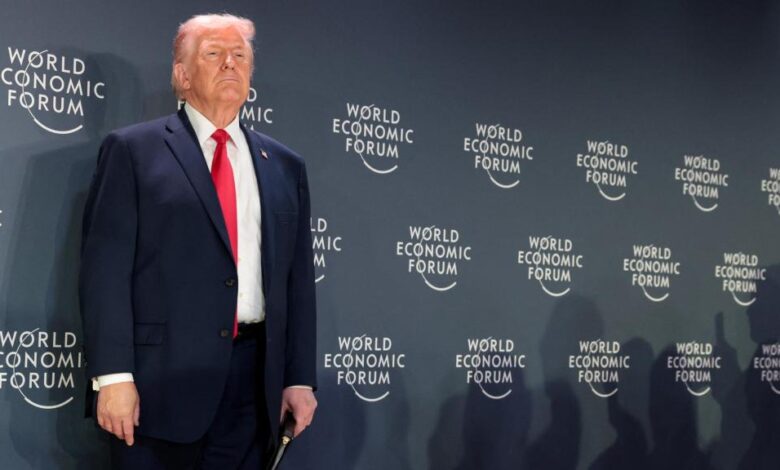
Donald Trump has once again shaken the global stage by announcing the creation of his own international entity, which he envisions as a replacement for the United Nations Security Council. The most high-profile name among the new participants is Vladimir Putin. The Russian president has agreed to join the so-called ‘Council of Peace’ (Junta de Paz), which already includes leaders from Israel, Argentina, Egypt, and more than thirty other countries. Spain has not yet decided on its position, while Europe is reacting with extreme unease.
A global split
Trump makes no secret of the fact that he fully controls the new body, personally approves its members, and holds veto power. Countries that refuse to join face the threat of economic sanctions — for example, he promised France 200-percent tariffs on wine and champagne. France, Norway, and Sweden have already rejected the invitation, accusing Trump of trying to dismantle the foundations of multilateral diplomacy and undermine the UN’s authority. China, it appears, is also displeased, although it has not commented officially. The European Commission and Spain have taken a wait-and-see approach and are in no hurry to respond.
Who’s in the game
Among Trump’s supporters are Israeli Prime Minister Benjamin Netanyahu, Egyptian President Abdelfatah al Sisi, as well as leaders from Turkey, Saudi Arabia, Qatar, the UAE, and Pakistan. The Latin American bloc is represented by Argentina and Paraguay. According to Trump, 35 out of 50 invited leaders have already agreed to participate. Most of them are countries traditionally loyal to Washington. However, the White House is keeping the list of participants under wraps, fueling rumors and speculation.
Money and Power
Joining the new club doesn’t come cheap: a permanent seat on the Peace Council is being offered for a billion dollars, though the contribution is officially voluntary. Trump makes it clear he alone will decide who is worthy to join the select group. The executive committee consists of his closest allies: Marco Rubio, Jared Kushner, Tony Blair, Marc Rowan, Robert Gabriel, Ajay Banga, and Steve Witkoff. Even America’s allies are raising questions about such a lineup.
Spain and Europe
For Spain, the situation is highly ambiguous. On the one hand, Madrid does not want to damage relations with Washington; on the other, it fears being isolated from its European partners. In Brussels, there are concerns the new structure could split the European Union and weaken Europe’s position on the world stage. Behind the scenes in the Spanish government, worries are surfacing: if Trump really starts dictating terms, Spain may face a difficult choice between loyalty to the US and solidarity with the EU.
What’s next
Trump plans to hold an official signing ceremony in Davos, where the Peace Council will be formally established. Originally, the body was created to oversee the ceasefire in the Gaza Strip, but now Trump’s ambitions are much broader—he openly states that his Council could replace the UN. At the same time, the former US president does not rule out keeping the position of head of the Council even after his presidential term ends. However, he added that he would like the UN “to continue to exist,” as it has “great potential.”
The world stands on the threshold of a new era where familiar rules no longer apply. Spain, like the rest of Europe, is forced to seek balance between old alliances and new realities. The only question is who will benefit and who will be left behind.