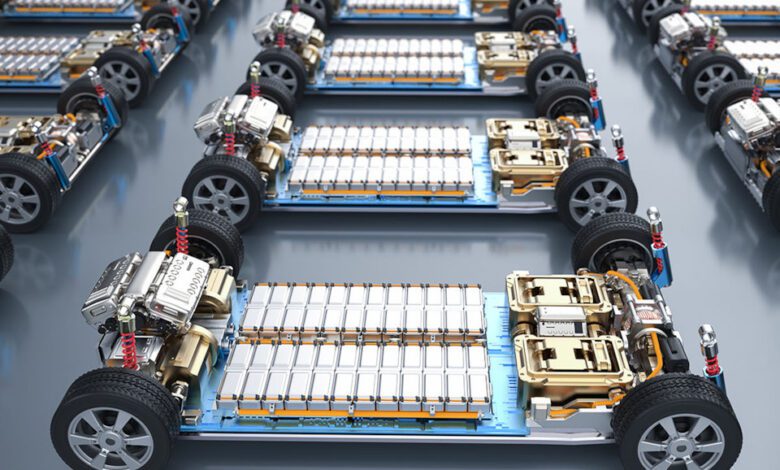
In recent years, even experienced drivers often feel confused when first encountering electric cars. Not long ago, debates revolved around injection versus carburetor engines, while today we’re seeing more vehicles on the roads that have no spark plugs, engine oil, or fuel tank under the hood. Instead, a large traction battery installed in the vehicle’s floor takes their place. This battery becomes the key structural element and the main focus of attention.
An electric car battery is more than just a large accumulator. It is a sophisticated engineering system, where every component affects range, reliability, and safety. Inside the battery pack, there are hundreds and sometimes thousands of individual cells grouped into modules and sections. This structure resembles a high-precision construction set, where correct layout is critical for the vehicle’s stable operation.
Myths and Reality
One of the most widespread misconceptions is that the battery supposedly generates energy. In reality, its function is solely to store and release electric charge. It works on the same principle as a standard car battery: energy is not created but stored and used as needed. The only difference lies in the scale and power of the system.
Another common myth is the belief that all electric vehicle batteries are the same and must be lithium-ion. While it’s true that lithium-ion batteries currently dominate the market, there are alternative technologies in development. In these systems, lithium acts as a charge carrier, with its ions moving between electrodes. The low mass of lithium enables high energy density with a relatively light battery weight.
Battery Internal Structure
A modern traction battery is a sealed high-voltage unit, most commonly around 400 volts. Inside, the cells are arranged to provide the required capacity and operating voltage. The design includes a cooling system, protection against moisture and mechanical impacts, as well as electronic monitoring components.
Each cell is an independent mini-battery consisting of an anode, a cathode, and an electrolyte. During discharge, electrons flow from the anode to the external circuit, while lithium ions pass through the electrolyte toward the cathode. This process delivers energy to the electric motor and other vehicle systems.
Materials and Technologies
Cathodes in modern batteries are made from complex chemical compounds based on lithium, nickel, manganese, and cobalt. One of the most common options is the NMC 811 composition, which is dominated by nickel, while manganese and cobalt are present in minimal amounts. Lithium itself makes up only 3–8% of the total mass of the cathode material, but without it, the battery cannot function.
Anodes are most often made of graphite—a material known for its high electrical conductivity and durability over many charge and discharge cycles. At the same time, researchers are exploring alternative options: sodium-based batteries, new types of electrolytes, and solid-state technologies that could improve safety and lower the cost of batteries in the future.
Charging and usage
Charging speed remains one of the key parameters for electric vehicles. Fast charging always generates increased heat, so engineers must balance charging speed with battery longevity. Modern models allow you to charge a battery from 30% to 80% in about 40–45 minutes when using CCS fast-charging stations.
It’s important to note that the battery discharges gradually, depending on driving conditions and load. Fast charging is still a compromise: it’s convenient on the road, but frequent use can accelerate cell wear. There is still no universal technology that enables batteries to fully recharge in just minutes without impacting their lifespan.
Fundamentals of Electrical Engineering
The issue of current direction often leads to confusion. Historically, it’s been accepted that current flows from positive to negative, although in reality, electrons move in the opposite direction—from the negative terminal to the positive one. Inside the battery, lithium ions are moving, while electrons travel through the external circuit. The direction of these processes reverses during charging and discharging.
It’s the coordinated operation of these mechanisms that allows an electric vehicle to efficiently transform stored energy into motion, delivering a quiet, smooth ride and producing zero exhaust emissions.
If you didn’t know
Evolute is a Russian electric vehicle brand that has been actively expanding since 2022. The company focuses on modern technology and localized production. The Evolute i-Jet and i-Sky models are positioned in the affordable EV segment and targeted at mass-market consumers. Production facilities are located in Lipetsk Region, while the brand partners with leading global component suppliers. In the near future, Evolute plans to expand its lineup and enter export markets.