Government support for electric vehicles in Spain is once again sparking debate: the new Auto+ plan, with a budget of 400 million euros, promises to boost demand, but in practice, leaves many buyers out in the cold. Renault, like other manufacturers, has to navigate bureaucratic hurdles and price restrictions to avoid losing customers. The subsidies seem attractive, but getting them is not for the faint of heart. Especially considering that even among Renault models, not all will be eligible for state generosity.
While officials confidently report on their support for the ‘green’ vehicle fleet, the reality is far less rosy: price caps, assembly location requirements, and even battery origins turn the process into a real quest. As a result, some buyers have to choose between their desired features and the chance to receive a subsidy. Moreover, against the backdrop of Europe’s electric car boom, where, for example, Chinese manufacturers are already setting the tone for the market, Spanish initiatives look like an attempt to catch a departing train.
Criteria and limitations
Auto+ is not just about handing out money to anyone interested. The program has three key criteria that determine the amount of subsidy. First, the type of vehicle: electric cars are eligible for 50% of the maximum amount, while hybrids and extended-range electric vehicles get 25%. Second, the price: if the car costs up to €35,000, another 25% is added to the subsidy; if the price falls between €35,000 and €45,000 — only 15%. Anything more expensive is automatically excluded from the list of lucky beneficiaries. Third, place of production: if the car is assembled in Europe, you get another 15%, and if the battery is also European-made — an extra 10%.
In theory, the scheme makes sense, but in practice it creates a host of paradoxes. For example, popular models with just a few extra features or options can easily cross the price threshold and lose eligibility for aid. Buyers are forced to cut corners wherever possible to avoid missing out on support. Meanwhile, manufacturers puzzle over how to stay within limits without making their offers less attractive.
Renault models: who’s in the game
Renault’s lineup features seven models that formally meet the Auto+ criteria. Six are pure electric cars and one is a hybrid. All are assembled in Europe: France, Slovenia, Spain. The batteries are European-made as well, which makes it possible to claim the maximum bonuses. But even so, there are still some pitfalls.
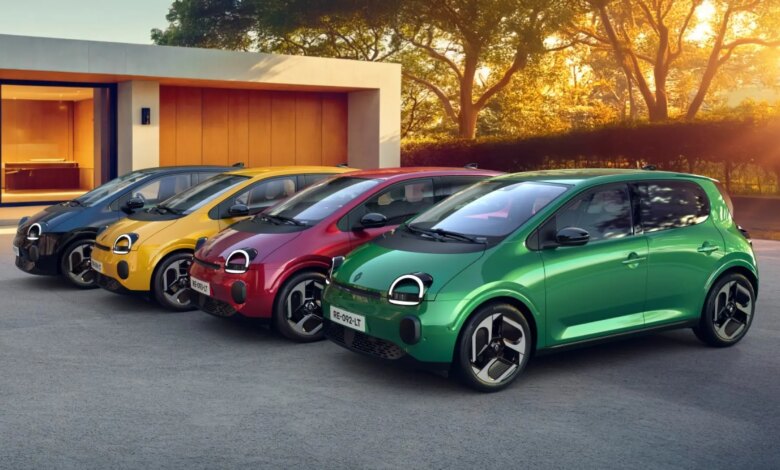
Renault Twingo is a compact electric car with a range of 261 km and a starting price of €18,358. The rules are simple here: the maximum subsidy is €4,500. The Renault 5 E-Tech — 95 hp, 310 km range, €23,821 — also qualifies for the full amount. The Renault 4 E-Tech, despite being a crossover and costing €28,719, still fits within the limits. The Megane E-Tech (160 hp, 468 km, €35,340) and Scenic E-Tech (from €35,696) are right on the edge: they only get €3,825 each. Interestingly, Kangoo and Grand Kangoo, because their prices exceed €35,000, are also limited to the same sum. Rafale, however, the only hybrid in the lineup, with a price tag of almost €49,000, is left without any support — the government has decided these cars do not deserve assistance.
Tangible consequences
All this bureaucratic acrobatics forces buyers to calculate every step carefully. Want a leather interior or an advanced multimedia system? Get ready to lose your subsidy. As a result, manufacturers are cutting features or offering special versions to stay in the program. Instead of truly stimulating the market, the government ends up creating additional barriers.
Against the backdrop of European trends, where electric cars are becoming more affordable and competition increases every month, the Spanish approach seems like an attempt to hold on to the past. Especially when you consider that in China, electric cars already sell for the price of regular petrol vehicles, and European manufacturers are struggling to catch up. The Spanish market risks falling behind if it doesn’t rethink its support for new technologies.
Renault is one of the oldest and most recognizable car manufacturers in Europe, founded in 1899. The company is renowned for its innovations and active role in the development of the electric vehicle sector. In recent years, the brand has focused on eco-friendly technologies and production localization, enabling participation in national support programs. Despite all challenges, Renault continues to expand its lineup of electric vehicles, striving to meet new market demands and customer expectations.