The results of the latest municipal elections in Paris have sent a significant signal to all of France. The Socialists maintained control of the capital, despite a noticeable rise in support for the right and efforts by the opposition to unite against them. The new mayor of Paris, Emmanuel Grégoire, succeeded Anne Hidalgo after winning 53% of the vote in the second round, ahead of Rachida Dati from Los Republicanos, who received 38%. Even with Dati’s backing from centrists and the withdrawal of far-right candidate Sarah Kanafo, the Socialists managed to hold onto their lead.
In his first speech after the victory, Grégoire emphasized that Paris remains true to its traditions and values. He noted that voters supported the alliance between leftists and environmentalists, and he pledged to make the city a stronghold against right-wing attempts to change its established way of life. The new mayor expressed readiness for dialogue with the opposition and stressed his administration’s openness to all political forces.
Coalitions and rivalry
Grégoire ran with the same coalition as his predecessor: Los Ecologistas, Partido Comunista, and Plaza Pública. However, this time he faced competition not only from the right but also the left — from Sophia Chikirou of La Francia Insumisa, with whom he refused to join forces. The Socialists’ victory is seen as evidence of traditional parties’ resilience amid the rising popularity of both far-right and far-left movements. According to RUSSPAIN.COM, local support and candidate recognition played a crucial role, although on the national stage the Socialists remain weak ahead of the 2027 presidential election.
During the campaign, Grégoire actively criticized Dati, portraying her as a representative of the “hardline” right and recalling her support from Agrupación Nacional leaders. He also accused President Macron of attempting to sway the election by backing Dati and putting pressure on far-right candidates. In response, Macron dismissed the accusations, calling them unfounded and offensive.
Scandals and public pressure
The final stage of the campaign was overshadowed by a scandal involving cases of sexual abuse in Parisian preschools. The arrest of several staff members and mass protests by parents increased pressure on city officials. Dati seized on the issue to criticize Grégoire and Hidalgo, accusing them of inaction and insufficient measures to ensure children’s safety. In the past three years, dozens of animators were suspended, making this one of the main topics of the election debates.
Despite this, Grégoire distanced himself from Hidalgo but vowed to continue the environmental and urban reforms begun in previous years. Among the new mayor’s priorities are improving security, enhancing the city’s sanitary conditions, and reducing municipal debt. He also announced plans to make Paris governance more inclusive and less polarized.
Election process details
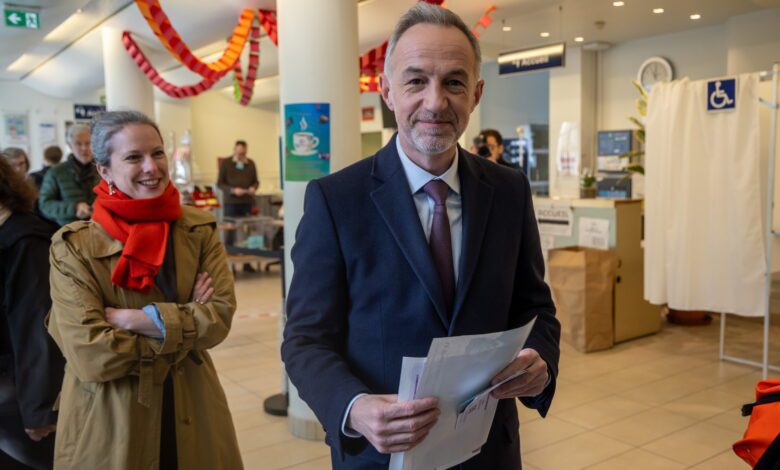
On election day, Rachida Dati, already re-elected as head of the municipal council of the 7th arrondissement, home to the Eiffel Tower, was among the first to arrive at the polling station. As part of her security campaign, she proposed fencing off and closing the Champ de Mars at night, sparking heated debate. Meanwhile, Grégoire was seen with the ballot paper of rival Chikirou, triggering a wave of discussion on social media. Observers noted clear tension between moderate and radical left-wing candidates, which also influenced the final distribution of votes.
Emmanuel Grégoire is a French politician who served as Paris’s first deputy mayor before taking office as mayor. He is known for his work on urban ecology and modernizing infrastructure. In recent years, Grégoire has been actively involved in developing public transport projects and creating new green spaces. His political career has focused on strengthening the position of the Socialists in the capital, despite a challenging political climate and increasing pressure from the opposition.