Catalonia is a land with centuries-old history, shaped by the intertwined destinies of ancient peoples, shifting borders, and the gradual formation of a unique identity unlike any other. The region’s name, so familiar today, is actually the subject of long-standing debate and surrounded by a host of hypotheses. Delving into the etymology of this word is like embarking on a journey through the ages, from the mysterious Iberian tribes to the powerful medieval kingdoms.
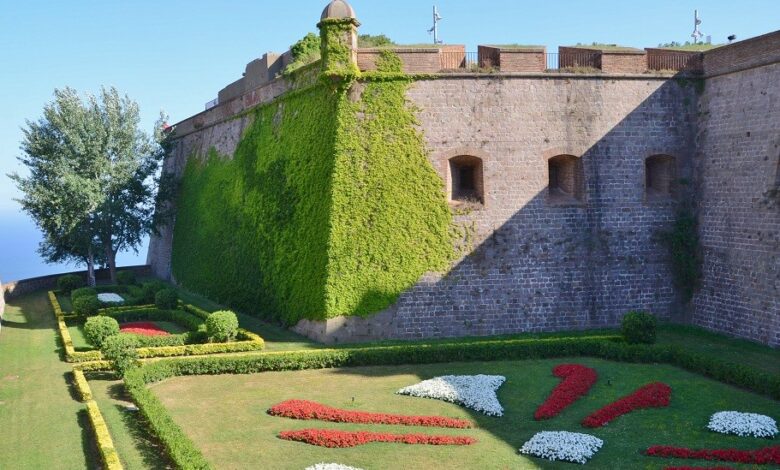
One of the most plausible and widely accepted theories links the name “Catalonia” to the word “castlà” or its Latin counterpart “castlanus,” which in the Middle Ages referred to a castle’s administrator or castellan. At that time, what is now Catalonia was part of the so-called Spanish March—a buffer zone established by Charlemagne’s empire to guard against the advance of Al-Andalus. The land was literally dotted with hundreds of castles and fortresses, making it unsurprising that it might have been called the “land of castles” or “land of castellans,” a name that eventually evolved into Catalonia.
Another intriguing theory takes us even further back in time, to the era before the arrival of the Romans. According to this hypothesis, the name derives from the Iberian tribe Lacetani (lacetani), who inhabited the central part of the region, particularly the present-day comarca of Solsonès. As a result of complex phonetic shifts and sound rearrangements (metathesis), the word “lacetani” may have transformed into “catelans,” and later into “catalans,” meaning “Catalans.” Thus, the name of the region could have come directly from its ancient inhabitants.
There are also other, less common but equally intriguing theories. Some historians point to a connection with the Goths, suggesting that the name originated from “Gothia” or “Gotholandia”—the term used by the Franks for lands still inhabited by Visigoths after the Arab conquest. There is also a romantic legend about the mythical hero Otger Cathaló, who supposedly fell in battle against the Muslims, and in whose honor Charlemagne named the reconquered lands. However, this version lacks serious historical evidence and belongs more to the realm of folklore.
Throughout its long history, this region has had many names, each reflecting changes in eras and rulers. Before the Romans, the land was home to Iberian tribes such as the Laietani and the Indigetes. Under the Roman Empire, it formed part of the province of Hispania Citerior, and later of Hispania Tarraconensis, with its capital in Tarraco (now Tarragona). In the early Middle Ages, after the period of the Spanish March, the name Cathalania or Catalunya began to appear in official documents from the 12th century. Later, as part of the powerful Crown of Aragón, the area was known as the Principality of Catalonia. Today, its official names are Cataluña in Spanish and Catalunya in Catalan.
Today, Catalonia is one of Spain’s 17 autonomous communities, located in the northeast of the Iberian Peninsula. Its capital and largest city is Barcelona, a global center for tourism, the economy, and culture. The region has two official languages: Catalan and Spanish, with Catalan enjoying a special status. Catalonia plays a crucial role in Spain’s economy, boasting a developed industrial sector, thriving tourism industry, and a rich cultural heritage that attracts millions of visitors from around the world.