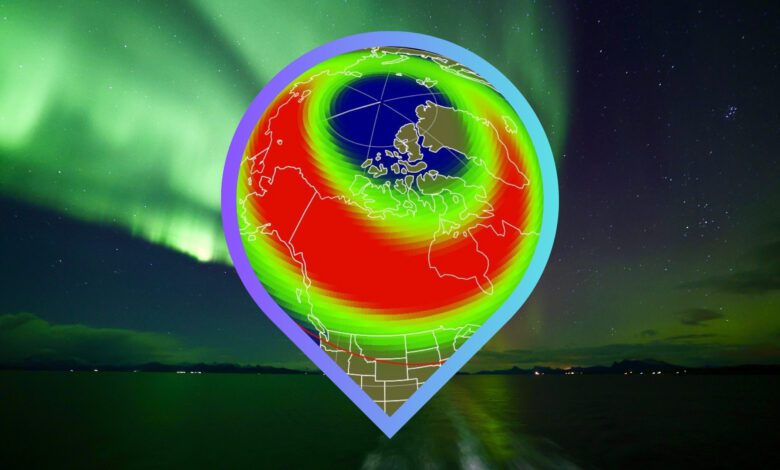
On the evening of January 16, residents of the northern regions of the United States held their breath in anticipation of a rare natural spectacle. According to space weather experts, in the coming hours, the northern lights could appear over fifteen states at once. This unusual phenomenon is caused by a powerful stream of solar wind that has struck Earth’s magnetosphere. Such surges in solar activity are uncommon, and their effects can surprise even seasoned observers.
A high-speed solar wind, released from a giant coronal hole on the Sun’s surface, has already reached near-Earth space. As a result, the planet’s magnetic field has come under pressure, creating the conditions for geomagnetic storms. Experts estimate that over the next 24 hours, disturbances could range from minor to moderate, giving people the chance to witness the aurora borealis well beyond its usual range.
Event geography
According to the latest projections, the states with the potential to witness the phenomenon include Alaska, North Dakota, Minnesota, Montana, Wisconsin, Michigan, South Dakota, Idaho, Maine, Vermont, New Hampshire, Washington, Iowa, Wyoming, and New York. In some of these places, such occurrences are extremely rare, which only fuels the excitement of locals and tourists alike. There’s particular intrigue in the possibility that the aurora could reach the southern borders of these states if geomagnetic activity intensifies.
However, experts note that the northern lights are an unpredictable phenomenon. Even with favorable forecasts, they can suddenly vanish or, conversely, flare up where no one expected them. Everything depends on numerous factors: the density of the solar wind, the state of the magnetosphere, and even the local weather conditions at the observation site.
Viewing time and conditions
The best chances to see colorful lights in the sky will come after nightfall. Peak activity is expected between 1 a.m. and 7 a.m. Eastern Time. During this period, geomagnetic storms may reach their maximum, making the aurora more likely to appear. Residents of the affected states are advised to choose an observation spot in advance—far from city lights and with a clear northern horizon.
For those planning to go aurora hunting, there are a few tips. First, let your eyes adjust to the darkness—this increases your chances of spotting even faint glows. Second, modern smartphones can capture dim colors that aren’t always visible to the naked eye. And, of course, don’t forget warm clothing: January nights in northern states don’t forgive carelessness.
Technology and forecasts
In recent years, seeing the Northern Lights has become easier thanks to dedicated apps and online maps. Programs like “My Aurora Forecast & Alerts” or “Space Weather Live” allow users to receive personalized notifications about the likelihood of aurora activity in specific locations. They also provide data on current geomagnetic activity and short-term forecasts.
Enthusiast photographers have also benefited. There are detailed guides available for capturing the Northern Lights, covering everything from setting the right exposure to adjusting white balance. The key is not to miss the moment, as the aurora can appear suddenly and disappear just as quickly.
Impact on everyday life
Geomagnetic storms that cause the aurora can affect more than just the beauty of the night sky. Sometimes, they lead to disruptions in radio communications, navigation systems, and even power grids. However, experts do not expect any serious consequences this time: geomagnetic activity is rated as moderate, so the main “damage” will be to the peace of mind of those who dislike surprises.
Still, for many residents of the northern states, this night promises to be unforgettable. The chance to witness the Northern Lights without having to travel to the Arctic is a rare gift of nature that shouldn’t be missed. Even if the sky remains dark, the very anticipation of a miracle can bring people together and create new memories.
In case you didn’t know, the National Oceanic and Atmospheric Administration (NOAA) is the leading US agency responsible for monitoring space weather, climate changes, and natural phenomena. NOAA’s Space Weather Prediction Center regularly publishes up-to-date information on solar activity, issues warnings about potential geomagnetic storms, and helps millions of people around the world stay informed about events happening beyond Earth’s atmosphere.