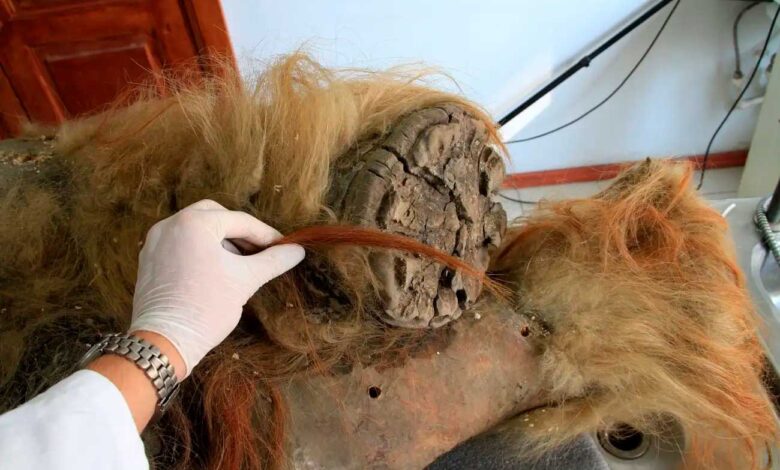
A groundbreaking event in paleogenetics has the potential to reshape the way extinct species are studied. An international team of experts managed to extract and decode ribonucleic acid from the tissues of Yuka the mammoth calf, discovered in northern Yakutia. The remains are estimated to be about 40,000 years old, making this the oldest sample in which RNA has ever been identified.
Yuka is one of the best-preserved specimens of its kind. Discovered in 2010, the body retained not only bones but also soft tissues, thick fur, and even parts of the brain. Researchers believe the animal died young, possibly as a result of an attack by predators from the Ice Age.
Until recently, scientists believed RNA could not survive for such extended periods. This molecule is extremely unstable and typically breaks down soon after an organism’s death. Previously, the record belonged to the remains of an ancient wolf, which were about 14,000 years old. However, the permafrost conditions that preserved Yuka allowed RNA molecules to endure much longer.
Researchers employed innovative methods for working with ancient samples. To prevent contamination and molecular decay, all procedures were conducted in sterile laboratories, using liquid nitrogen and specialized air filtration. This approach minimized the impact of external factors and preserved these unique biomolecules.
As a result of the analysis, scientists identified hundreds of different types of RNA, including messenger and non-coding forms. Among them were molecules responsible for muscle function and metabolic regulation under stress. This allowed researchers to draw conclusions about the physiological processes taking place in the mammoth calf’s body during its final moments. According to the analysis, genes associated with the emergency mobilization of the animal’s resources were activated at the time of death.
Interestingly, by comparing DNA and RNA data, scientists were able to determine the mammoth calf’s sex. Previously, it was believed that Yuka was female, but genetic analysis revealed that it was actually male.
Particular attention was paid to searching for traces of ancient viruses, such as influenza or coronaviruses. Despite thorough research, none were found. Nevertheless, scientists believe that such discoveries could be possible in the future, especially when studying other species preserved in permafrost.
Experts note that such discoveries are extremely rare. The combination of unique preservation conditions and modern technologies has made it possible to obtain data that were previously considered unattainable. This opens new prospects for studying the biology of extinct animals and the processes that occurred in their bodies.
The scientific community has already recognized the significance of this achievement. Some experts believe that such cases will remain rare, as it is extremely difficult to find such well-preserved specimens. Nonetheless, the success with Yuka demonstrates that the possibilities of modern science keep expanding.