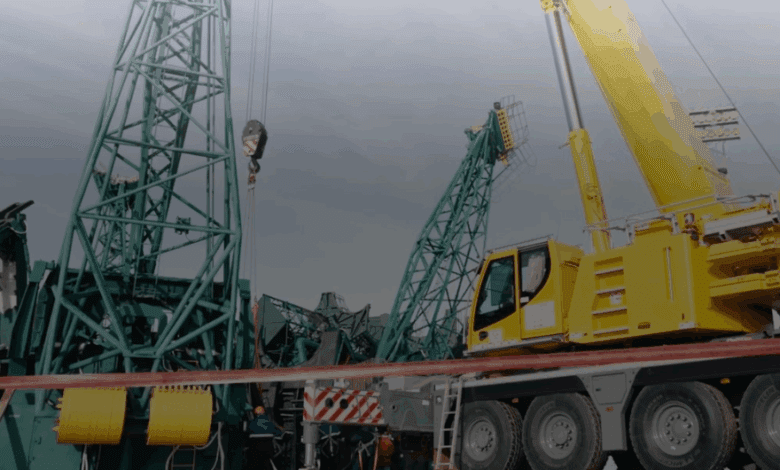
Work is once again in full swing at the Baikonur Cosmodrome: specialists have begun restoring the service cabin that collapsed in November 2025. The incident occurred at launch pad 31, where a 144-ton metal structure unexpectedly fell into the flame trench during preparations for the launch of a Soyuz-2.1a rocket carrying the manned spacecraft Soyuz MS-28. This event was a serious test for the cosmodrome’s entire infrastructure, as pad 31/6 remains the only site currently capable of supporting crewed Soyuz launches.
All necessary components for the repair have now been delivered to the site. Workers are priming and painting the new elements of the cabin to return the launch complex to service as soon as possible. According to preliminary plans, the first launch after the restoration is scheduled for February 2026. For Baikonur, this is more than just another repair—it is about preserving the cosmodrome’s strategic role in international space programs.
Causes of the accident
The collapse of the service cabin came as a surprise to specialists. According to preliminary information, the structure failed under the load during launch preparations. Only technical staff were present at the site when the incident occurred, and none sustained serious injuries. However, the incident sparked a wave of discussion within the professional community, with experts highlighting the need to modernize equipment and strengthen oversight of the infrastructure’s condition.
The investigation uncovered a number of technical shortcomings, including wear and tear of metal structures and outdated service system components. As a result, the decision was made not only to restore the cabin, but also to conduct a comprehensive inspection of all similar facilities at Baikonur. This is expected to reduce the risk of similar accidents in the future.
Progress of restoration work
The restoration of the launch complex is proceeding at an accelerated pace. Dozens of specialists are working on site, utilizing modern welding and installation equipment. Special attention is paid to the quality of new parts: each one undergoes strict inspection before installation. The work is being carried out around the clock to meet tight deadlines and keep the launch schedule on track.
Alongside repairs to the service cabin, safety and automation systems are also being upgraded. Engineers are introducing new solutions to improve the reliability of the launch complex. The main stages of installation are expected to be completed in the coming weeks, after which equipment testing will commence. Only then will a decision be made regarding the site’s readiness for launch.
Significance for the Cosmodrome
Pad 31/6 plays a key role in supporting crewed launches from Baikonur. With other launch complexes closed, all major crew missions now take place here. Restoring the service cabin is not just a technical issue—it is also a strategic one: Russia’s participation in international space programs and fulfillment of obligations to its partners depend on it.
Once repairs are complete, the launch complex is expected to receive a series of upgrades to increase its efficiency and safety. In the future, this could serve as a model for modernizing other facilities at the cosmodrome. In any case, attention is now focused on Baikonur not only within Russia, but abroad as well.
Looking ahead
The first launch after the accident is already scheduled for February 2026. Preparations are in full swing: teams are being assembled, test scenarios are being developed, and equipment is being selected. Cosmodrome management emphasizes that all work is being carried out in line with new safety and quality standards.
Restoring the service cabin is just one part of a large-scale program to upgrade Baikonur’s infrastructure. In the coming years, several more major projects are planned here to boost the cosmodrome’s competitiveness on the global market. For professionals, this is an opportunity to demonstrate a high level of expertise and technical skill.
In case you didn’t know, ROSCOSMOS is the state corporation responsible for Russia’s space activities. The company handles the launch of manned and cargo spacecraft, the development of orbital stations, and international cooperation in the space sector. Baikonur is one of the world’s oldest and largest cosmodromes, from which the first manned spaceflights in history were launched. Today, it remains a key site for the implementation of Russian and international space programs.