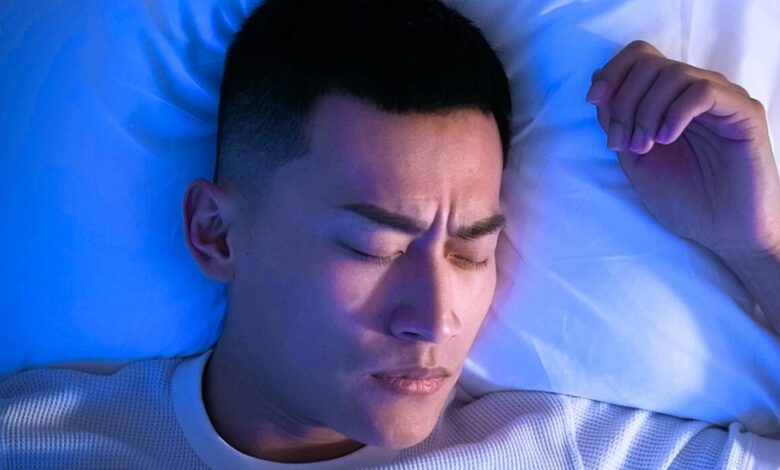
A medical breakthrough has made headlines: artificial intelligence can now predict the likelihood of developing over a hundred different diseases based on just one night’s sleep. Researchers from Stanford University and their colleagues have developed a unique model that analyzes physiological parameters recorded during sleep to forecast long-term health risks. This isn’t just another digital innovation — it marks a fundamental shift in the approach to early diagnosis.
The technology relies on data gathered through polysomnography—a complex procedure in which dozens of sensors are attached to a person. These sensors monitor brain activity, heart function, respiration, as well as eye and limb movements. Typically, such studies are carried out in specialized clinics and can be uncomfortable for patients, but they provide the most comprehensive picture of what happens in the body during sleep.
The newly developed model, dubbed SleepFM, was trained on an extensive dataset comprising nearly 600,000 hours of sleep recordings from 65,000 patients. This enabled the algorithm to detect even the slightest deviations in physiological signals that may point to hidden health threats.
Medicine of the Future
SleepFM is more than just another piece of medical software. Essentially, it’s a foundational model capable of analyzing data as deeply as modern language AIs process text. But instead of words and sentences, it deals with millions of short fragments of physiological signals collected at five-second intervals. This approach makes it possible to detect complex interactions between different body systems that previously went unnoticed.
The key feature of the new algorithm is its ability to work even with incomplete data. Researchers used a contrastive learning method: some information — for example, about heart rate or breathing — was deliberately omitted to test whether the AI could fill the gaps using other indicators. The results were impressive: the model confidently predicted risks across 130 disease categories, including dementia, heart failure, cancer, and even pregnancy complications.
Invisible signals
It turned out that the most accurate predictions are linked to cases where different body systems behave out of sync. For example, if the brain shows signs of deep sleep, but the heart is active, this can be a warning sign. Such “disagreements” between organs often foreshadow serious problems, even though the person may not feel any symptoms.
The SleepFM model demonstrated particularly high accuracy in predicting Parkinson’s disease, heart attacks, strokes, chronic kidney failure, as well as prostate and breast cancer. In some cases, accuracy reached 80%—meaning eight out of ten forecasts matched real events in the future.
Advantages and limitations
Unlike traditional methods, which rely on individual indicators or patient complaints, this new AI takes into account the complex interconnections between all body systems. This enables the detection of health threats at the earliest stages, when the progression of disease can still be prevented. However, the technology does have its limitations: most of the data comes from people who were already referred for sleep-related examinations, leaving a portion of the population unmonitored.
In addition, clinical standards and diagnostic methods have changed over the past decades, which also impacts prediction accuracy. Nevertheless, the potential for using such models in combination with wearable sleep-tracking devices is enormous. In the future, it may become possible to offer services that monitor health in real time and alert users to risks long before symptoms appear.
The Language of Sleep
The developers compare their model to large language AIs that learn to understand human speech. But SleepFM is mastering the “language of sleep,” a complex signaling system the body uses every night. This opens up new prospects in medicine: doctors will now be able not only to treat illnesses, but to prevent them—relying on objective data rather than guesswork or patient complaints.
Ethical and privacy issues, of course, remain unresolved. But it’s clear that artificial intelligence is already capable of transforming our understanding of health and longevity. And perhaps, in the near future, a single night’s sleep will reveal more about your body than years of traditional check-ups.
If you didn’t know, Stanford University is one of the world’s leading research institutions, renowned for its innovations in medicine, biotechnology, and artificial intelligence. The university consistently ranks among the top five globally and is known for partnerships with major research labs and Silicon Valley companies. Many discoveries made at Stanford have formed the foundation of modern technologies used worldwide today.