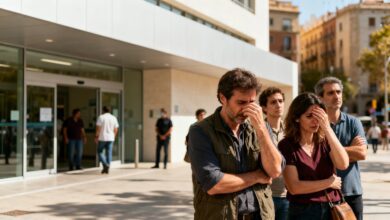
The Spanish Supreme Court’s ruling on the right to euthanasia for a 24-year-old Catalonia resident has become one of the most talked-about events in recent months. For Spanish society, this verdict marks not only the end of a protracted legal battle but also a new stage in the debate over the boundaries of personal autonomy and family conflict in matters of life and death. At the center of attention is a young woman, paralyzed as the result of an accident, and her father, who made every effort to prevent her wish to end her life legally under the euthanasia law.
The legal dispute lasted for several months, attracting the attention not only of lawyers but also of the general public. The question of who has the final say—the individual or their relatives—once again became a national talking point. For many Spaniards, this case has come to symbolize the clash between individual rights and family values, as well as being a test for the country’s new legal practice concerning euthanasia.
The Court’s Decision
The Spanish Supreme Court refused to consider the appeal filed by the woman’s father, thereby upholding the decisions of lower courts. The judges emphasized that they saw no grounds to revisit the case, since all necessary legal procedures were followed and the applicant herself was an adult who had received approval from the Catalonia Evaluation and Guarantees Commission.
The court’s decision notes that the father failed to provide convincing evidence that could cast doubt on the legality or validity of the euthanasia permit. The judges emphasized that their role is not to reconsider already examined facts, but to ensure consistency in judicial practice. In this case, in their view, there was no disagreement between the decisions of the different court levels.
Consequences for the parties
For the girl’s family, this decision is final within the ordinary judicial system. Now, the father’s only option is to appeal to the Constitutional Court if he believes his rights were violated during the proceedings. However, the chances for a review are extremely slim, since the Supreme Court has already determined there are no grounds for further appeals.
The court also ordered the father to pay up to 2,000 euros in legal costs to the government of Catalonia. This measure was another blow to a family that had already endured a difficult emotional and legal marathon. Meanwhile, for supporters of the right to euthanasia, the court’s decision has become an important precedent affirming the possibility for seriously ill citizens to make choices for themselves.
Public response
Public reaction to the court’s decision has been mixed. Heated debates erupted on social media and in Spanish media outlets over the boundaries of personal freedom, the role of family and the state in matters of life and death. Some believe the court upheld the right to a dignified departure, while others argue it ignored the feelings and arguments of loved ones.
Legal experts note that this case could serve as a precedent for future cases related to euthanasia. Meanwhile, representatives of religious and conservative organizations have already announced plans to continue campaigning for stricter legislation. In the coming months, more initiatives and discussions are expected both in parliament and among public organizations.
A look into the future
The case of the young woman from Catalonia became not only a personal tragedy, but also a significant milestone in the development of Spanish legal practice. The Supreme Court’s decision effectively affirmed the right of adult citizens to control their own lives under the existing euthanasia law. For many families, this signals that the state is prepared to support personal choice even in the most complex and controversial situations.
At the same time, the conflict between personal will and family interests is likely to spark debates and disagreements for a long time to come. Spanish society now faces the challenge of finding a balance between respect for individual autonomy and upholding traditional values. How events will unfold remains to be seen.