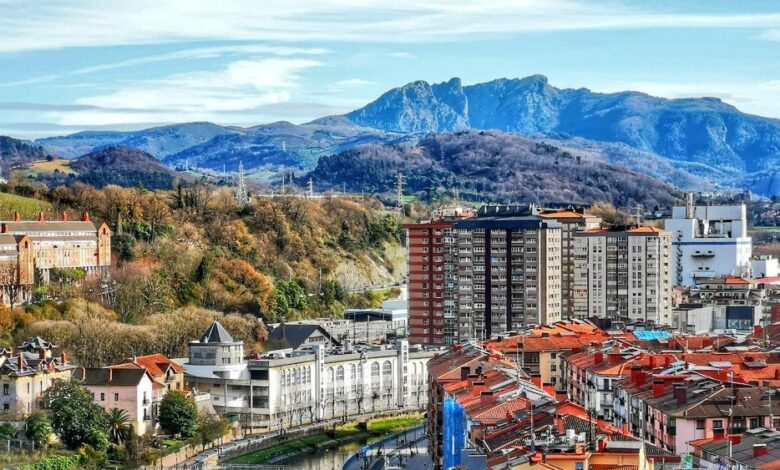
Errenteria, located just 15 minutes from San Sebastián, has long since ceased to be just a dot on the map of Gipuzkoa. Often thought of as purely industrial, this town holds far more secrets and unexpected contrasts than most realize. Its historic center, industrial heritage, and even traces of prehistoric times combine to create a unique character unmatched anywhere else in the Basque Country.
At first glance, Errenteria may seem like a typical working-class town, but a stroll through its ancient streets reveals a very different reality. Here, past and present collide at every turn, and the atmosphere recalls an era when the city thrived as a major trading port and a magnet for thousands of families from all over Spain.
The Medieval Center
The heart of Errenteria is its old quarter, the largest in the Oarsoaldea district. Seven streets, still following their medieval layout, preserve the spirit of centuries past. The Gothic Church of the Assumption of Our Lady rises above the main square, flanked by the Augustinian monastery and the baroque Zubiaurre Palace. Each of these sites is not just an architectural landmark but an integral part of the city’s living fabric.
The Mikelatsulo tunnel, hidden beneath the new tower, deserves special attention. Once part of the defensive structures, today it has become one of the city’s most visited attractions. Equally fascinating is the old Fanderia Mill Complex on the banks of the Oiartzun River. Since the 15th century, iron was forged here, later animal feed was produced, and now it serves as a cultural space where you can see how the industrial past becomes part of modern life.
Industrial legacy
Errenteria’s nickname, the ‘little Manchester,’ is no coincidence. In the 19th and 20th centuries, the city underwent a true industrial boom. Glass and paper factories opened here, and smoking chimneys became symbols of a new era. Thousands of workers arrived seeking a better life, and the city grew rapidly, changing both its appearance and character.
As Idealista reports, it was industry that shaped Errenteria for many years. However, today many former factories and plants have found a new purpose—they have become cultural centers, museums, and venues for city events. This is a rare example of how industrial heritage not only does not hinder development, but actually becomes its foundation.
Traces of antiquity and culture
In the surrounding mountains, traces of much older eras can still be found. The Aizetako Txabala dolmen, over 5,000 years old, stands among American oaks and can be reached by a picturesque trail. This spot attracts not only history enthusiasts, but also those seeking peace and solitude far from the bustle of the city.
Errenteria is also known for its cultural traditions. Leire Martínez, former lead singer of the popular group La Oreja de Van Gogh, was born here and has always emphasized her connection with her hometown. In recent years, Errenteria has served as a filming location for renowned movies, including ‘Infiltrada’ by director Arantxa Echevarría, which won the Goya Award in 2025. This event once again highlighted the city’s cultural significance for the entire region.
Nature and gastronomy
The city is surrounded by mountains, making it an ideal destination for walks and outdoor activities. Aiako Harria National Park offers routes of varying difficulty, and from the summit of Fort San Marcos, there are breathtaking views over the Bay of Pasaia and San Sebastián. This spot has always held strategic importance, and today it attracts not only tourists but also locals.
The gastronomy of Errenteria deserves special mention. Here you can try true Basque delicacies: local-style crab meat, cod omelet, Tolosa beans, and fresh fish from Pasaia. Local restaurants are proud of their traditions and are not afraid to experiment, offering guests new flavors based on age-old recipes.
Interest in Errenteria has grown significantly in recent years. The city is becoming increasingly popular among travelers seeking not only scenic views but also a rich historical context. Here, you can feel how past and present merge into a single whole, creating a unique atmosphere that cannot be found anywhere else in the Basque Country.
In 2025, the film “Infiltrated” drew the attention of all Spain to Errenteria. Similar events have already occurred in the region: several years ago, San Sebastián became the hub of an international film festival, which also gave a powerful boost to tourism and cultural life. These examples show how even small towns can become centers of attraction for new ideas and projects if they preserve their uniqueness and remain open to change.