A monastery rarely mentioned in tourist brochures can truly change your perception of Spain’s cultural heritage. Nestled in the heart of Burgos province, far from bustling routes, stands a unique landmark where the past doesn’t just coexist with the present—it deeply weaves through it. This place has not only survived through centuries, but also preserves its authentic atmosphere, impossible to fake or recreate artificially.
Unlike most famous landmarks, this monastery has not fallen victim to mass tourism. There are no crowds here, and the silence itself seems part of the architecture. For those seeking off-the-beaten-path destinations and who value authenticity, a visit to this corner is a true discovery. Everyone who crosses its threshold enters a space where history is almost tangible.
Living tradition
The Monastery of Santa María Real in Villamayor de los Montes is not just an architectural monument, but a living religious community. Founded in the 13th century as a Cistercian nunnery, it is still home to nuns who lead a measured life, balancing prayer with craft. Guests are welcome here: tours are conducted by the sisters themselves, who share not only the monastery’s history but also personal memories, giving each visit a special warmth.
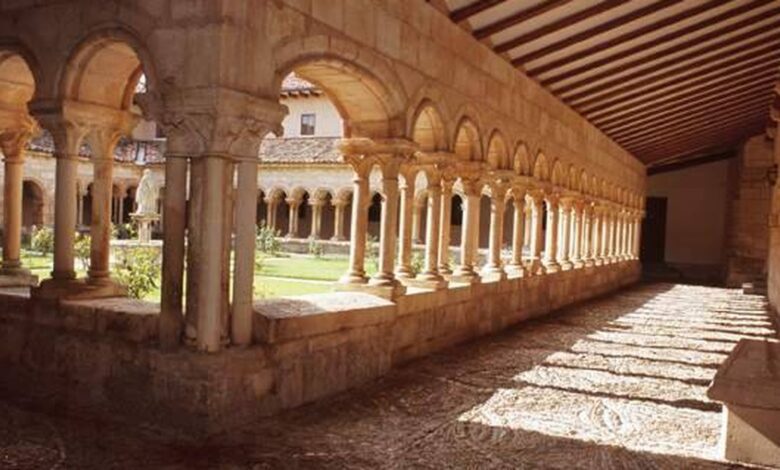
Inside the monastery, visitors can see a Gothic church with a single nave and a striking transept, as well as the famous Romanesque cloister. Special attention is drawn to the powerful stone masonry, strict lines, and lack of ornamentation—all reflecting the ideals of Cistercian architecture. Yet behind this outward simplicity hides a wealth of details that amaze the attentive observer.
Architectural mysteries
The monastery cloister has its own unique story. Its galleries, supported by graceful paired columns, offer views of the inner courtyard, where every element is crafted with meticulous care. On the 16th-century stone floor are depictions of animals, hunters, and the monastery’s coat of arms—a rare example of medieval decorative art preserved in its original form. These images not only adorn the space but also tell the story of the monastery’s life, its traditions, and its symbols.
Unique artifacts have survived in the monastery: ancient doors leading to various parts of the complex, the tombstone of an abbess, and special corridors reserved for the nuns and the deceased. Each of these elements forms part of a complex system where architecture serves not only aesthetics but also the strict monastic rules.
Historical context
The origins of the monastery date back to the 11th century, when a small male monastery dedicated to Saint Vicente stood on this site. In 1223, it was transferred to the spouses García Fernández and his wife, who initiated a major reconstruction and transformed it into a Cistercian nunnery, subordinate to the renowned Las Huelgas Abbey. Just five years later, the new church was consecrated, becoming a center of spiritual and cultural life for the region.
The church’s architecture combines Gothic and Romanesque features: tall pointed arches, ribbed vaults, and a stepped apse create an impression of upward movement, while the austere forms emphasize the asceticism of monastic life. Despite its modest size, the church impresses with its harmonious proportions and attention to detail.
Atmosphere and Daily Life
Today, the monastery remains not only a historical monument but also a living center of spirituality. The nuns continue traditions established eight centuries ago: practicing handicrafts, baking cookies, and making liqueurs, which can be purchased after the tour. These are not simply souvenirs, but a part of local culture passed down from generation to generation.
Visitors note the special atmosphere of this place: it’s easy to lose track of time here, and every step through the stone corridors recalls people who lived by strict rules for centuries. The monastery does not try to appear modern—on the contrary, its strength lies in its loyalty to tradition and its ability to preserve a unique way of life.
The Monastery of Santa María Real in Villamayor de los Montes is a rare example of how not only the walls but the spirit of an era can be preserved. Its history is more than a mere sequence of dates and events; it is a living fabric woven with the destinies of people, architectural discoveries, and cultural traditions. For those seeking authentic experiences, this place is a true revelation.
The Monastery of Santa María Real in Villamayor de los Montes is one of the few active Cistercian convents in Spain. Founded in the 13th century, it has survived wars, reforms, and periods of decline, yet has always remained a center of spiritual life in the region. Its architecture blends Gothic and Romanesque elements, and the cloister with its unique stone floor is considered one of the finest examples of Late Romanesque art. Today, the monastery is open to visitors, and its residents continue the traditions established many centuries ago.