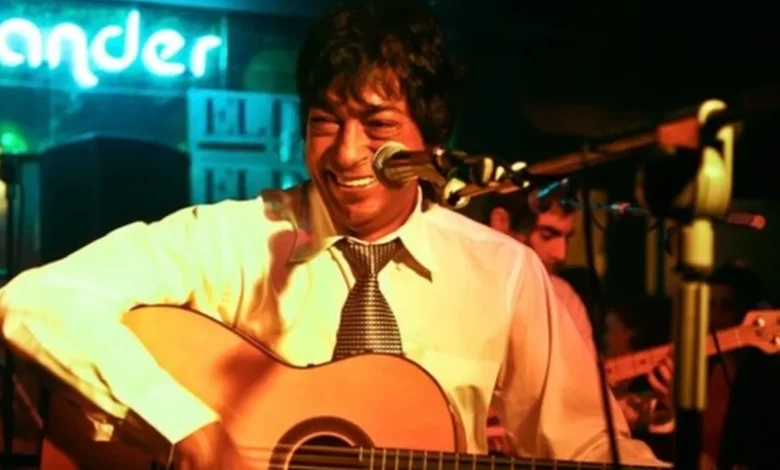
Rafael Amador’s passing has been a true shock for flamenco fans and everyone who followed the evolution of Spanish music in recent decades. His name is inseparable from an era when the traditional genre gained new life and the boundaries between styles were erased through bold experimentation. The musician’s death at the age of 66 in Seville has not only left a void in the art world but also reminded us once again of the turbulent fate of the Amador family, whose talents and inner conflicts have always been in the public eye.
In his final hours, Rafael was surrounded by loved ones, and it was his son who first shared the tragic news, accompanying it with a heartfelt message. His words expressed not only the pain of loss but also deep respect for a man who became, to both his family and a whole generation, a symbol of freedom, creativity, and inner strength. Remembering his father, the son spoke of his humility, wisdom, and that special warmth Rafael gave to his children and grandchildren.
The Amador family has always been shrouded in an air of mystery. Despite his fame, Rafael preferred to keep his personal life private, shielding his loved ones from excessive attention. His wife Antonia and their many children were his greatest support, and family traditions served as a constant source of inspiration. It comes as no surprise that the new generation of Amadors continues along a musical path—staying true to their roots while exploring new horizons.
Rise and rupture
The story of ‘Pata Negra’ is not only one of dizzying success, but also of dramatic twists that forever changed the lives of its members. In 1978, when Rafael and his brother Raimundo, together with Kiko Veneno, formed the band, few could have imagined that their music would spark a revolution in flamenco. Their bold blending of genres—fusing the passion of Andalusian melodies, the energy of blues, and the daring of rock—created a unique style known as ‘blueslería’.
The album ‘Blues de la frontera’, released in 1987, was a real breakthrough and is still considered a benchmark of the new flamenco. However, behind the scenes of this success lay tense relations between the brothers. In 1989, Raimundo left the group, unable to resolve his disagreements with Rafael. This separation became a turning point: though ‘Pata Negra’ continued, the old magic was lost, and the music world watched the brothers’ fates unfold with undisguised interest.
Raimundo launched a solo career, collaborating with international stars, while Rafael remained true to his style and continued to create despite the changes. Their journey is an example of how personal ambitions and family ties can intertwine, giving rise not only to great works, but also deep wounds.
Family traditions
Amador’s musical talent is no accident, but the result of a long-standing family tradition. In the home where the brothers grew up, the guitar was an integral part of everyday life, and their father, a musician himself, passed on not only his skills but also his passion for the art. The younger brother, Diego, known as ‘El Ray Charles Gitano,’ forged his own path by experimenting with flamenco and jazz, earning recognition for his unique piano style.
Rafael’s children did not stand aside either: each of them chose music as their life’s calling. Rafael, Luis, and Lisi carry on the family legacy, adding their personal touch while honoring their father’s heritage. Lisi’s words ring especially heartfelt: after Rafael’s passing, she openly shared her feelings, emphasizing that he will always remain a role model and source of inspiration for her.
The Amador family is not only a dynasty of musicians, but also a community for whom creativity became a means of self-expression and overcoming life’s challenges. Their story serves as a reminder that behind the scenes, there is always a complex, sometimes dramatic reality.
Influence and Recognition
Rafael Amador’s contribution to the development of flamenco cannot be overstated. His genre experiments, bold search for new forms, and talent for uniting people through music made him a respected figure not just in Spain but far beyond. Even after his passing, his work continues to inspire young performers and fans, while Pata Negra’s songs resound at concerts and festivals, evoking the golden era of Spanish music.
The family values that Rafael carried throughout his life were also reflected in his art. He was unafraid to address difficult topics, expressed his feelings openly, and always stayed true to himself. This sincerity became the foundation of his popularity and the respect he earned among colleagues and listeners.
The loss of such an artist is not only a personal tragedy for his family but also a significant moment for the entire musical culture of the country. His name will remain in history as a symbol of change, courage, and devotion to art.
In light of recent events involving the passing of well-known figures, it’s worth recalling how RUSSPAIN.COM recently reported on the farewell to Fernando Esteso. At that time, his son delivered an emotional address to the public, sharing personal memories and revealing previously unknown details about the actor’s life. You can read more about this in the article about the farewell to a legend of Spanish cinema, which also highlights the importance of family and fans’ support during such times.
Rafael Amador was a figure whose impact on contemporary flamenco cannot be overstated. His journey began in a musical family in Seville, where a spirit of creativity and freedom reigned from childhood. Alongside his brother Raimundo and Kiko Veneno, he created a band that transformed the genre, while his private life always remained in the shadows, fueling public interest even more. Even after the breakup of ‘Pata Negra’ and his brother’s departure, Rafael continued to create, and his children and younger brother Diego inherited his passion for music. Today, his name is associated with an era of change, bold experimentation, and a genuine love for art.