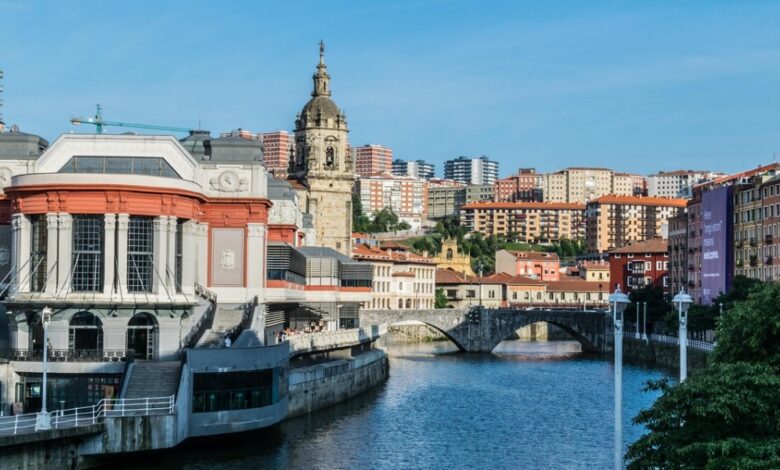
Bilbao is a city that never ceases to surprise, even those who consider themselves experts in Spanish history. Its name, like an ancient code, echoes with traces of medieval legends, linguistic fusion, and unique geography. To understand why the city is called Bilbao, you need to look into its past—where, at the crossroads of Basque and Castilian worlds, a unique urban identity was born.
Today, Bilbao is a modern metropolis, but its roots go back to the 13th century. In 1300, the powerful Lord of Biscay, Diego López V de Haro, granted the settlement city status. However, life had thrived here long before this official recognition: fishing villages and small ports already dotted the banks of the Nervión River. Locals skillfully made use of the natural advantages—a mountain-protected estuary that fostered trade and shipbuilding.
A city by the river
In the Middle Ages, Bilbao quickly became a major trading hub in northern Spain. Shipments of wool, iron, and other goods departed from its docks to England, Flanders, and France. Castile’s economy depended heavily on this city, and its streets—the famous Seven Streets—became symbols of prosperity and vibrant commercial life.
The Industrial Revolution of the 19th century transformed Bilbao beyond recognition. Iron mines, shipyards, and banks turned the city into the industrial heart of the region. But even in the era of factories and smoking chimneys, Bilbao maintained its connection with nature: the river and surrounding hills continued to shape its character.
The Mystery of the Name
The origin of the name Bilbao has long been a hot topic among linguists and historians. The most convincing theory points to Basque roots. It is believed that “bil” refers to wet meadows or reed thickets, while “bao” or “ba” means a lowland at the foot of hills. This interpretation perfectly describes the place where the city was founded: a marshy valley surrounded by mountains and crossed by a river.
There are alternative hypotheses as well. Some researchers see Latin roots in the name, suggesting it could mean “fortified place.” Others associate the toponym with ancient settlements that once existed nearby. However, the Basque version appears most logical, given the geography and historical context.
A Journey Through Time
The name Bilbao did not always sound as it does today. Old documents list variants such as Bilvao, Bilbago, Bilboa, and Biluao. The modern form was established only in the 18th century. In Basque, the city is traditionally called Bilbo—a name still heard today in everyday speech among locals.
These changes reflect the region’s complex history, where different cultures and languages have intersected for centuries. Each version of the name is a trace of an era, a mark on the city’s collective memory.
The meaning of “botxo”
The word “botxo” holds a special place in Bilbao’s daily life. This is an informal nickname that locals use for their city with particular affection. In Basque, “botxo” translates as “pit,” “hollow,” or “basin.” And indeed, Bilbao seems tucked into a natural bowl: mountains encircle it on one side, with a river flowing by on the other.
This nickname not only highlights the unique geography, but also reflects how residents feel about their city. For them, “botxo” is more than just a word—it’s a symbol of comfort, safety, and a unique atmosphere found nowhere else.
The pulse of today
Today, Bilbao is a city where past and future walk hand in hand. Its historic quarters stand alongside avant-garde architecture, and its industrial heritage blends with cultural innovation. Waterfront strolls, bustling markets, cozy bars, and closeness to nature make life here truly special.
Bilbao’s climate is wet and changeable, but this is what shapes the character of its people: open, welcoming, and a bit stubborn. The city continues to evolve, but its spirit remains the same—just like the mystery of its name, which is still debated in the streets and in university halls.
If you didn’t know, Bilbao is the largest city in the Basque Country and one of the key economic centers in northern Spain. The renowned Guggenheim Museum is located here, a symbol of the city’s cultural renaissance. Bilbao is famous for its culinary traditions, modern infrastructure, and unique blend of historic architecture with contemporary buildings. The city attracts thousands of tourists every year and is considered one of the most comfortable places to live in Spain.