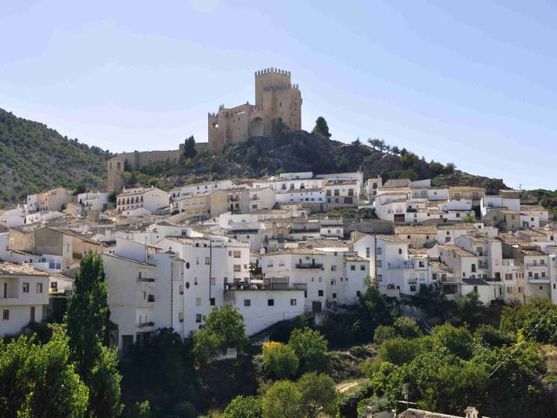
Spain is much more than the sun-drenched beaches of the Costa del Sol or the bustling streets of Barcelona. Deep in the heart of the country, far from the usual tourist trails, lie true treasures that offer travelers a genuine sense of discovery. One such place is Vélez-Blanco, hidden away in the mountains in the north of Almería province. Officially recognized as a historic and artistic complex, this town offers a unique blend of majestic architecture, ancient history, and untouched nature, leaving a lasting impression.
A castle with a Hollywood destiny
The landmark and dominant feature of the Vélez-Blanco landscape is undoubtedly the Castillo de los Fajardo castle-palace. Perched atop a rocky cliff, it seems to hover above the whitewashed houses, painting a scene worthy of an artist’s brush. Built in the early 16th century on the site of an old Arab fortress, this castle is a stunning example of the transition from Gothic to Renaissance. Its austere outer walls conceal the history of the powerful Marquises de los Vélez, who transformed the defensive stronghold into a luxurious residence.
However, the most dramatic part of the castle’s history is tied to its greatest jewel—the inner courtyard, the Patio de Honor. This masterpiece, crafted entirely from gleaming Macael marble, featured graceful arcades, columns, and exquisite carvings. Unfortunately, at the beginning of the 20th century, when the castle fell into disrepair, its interiors were sold off. As a result, the unique courtyard was carefully dismantled, packed up, and shipped across the ocean. Today, to see this marvel of Spanish Renaissance, you must travel not to Andalusia, but to the Metropolitan Museum in New York, where it is exhibited as one of the most valuable artifacts. This story lends the castle a touch of melancholy while highlighting its exceptional worth.
Labyrinths of the Moorish Past
Descending from the foot of the fortress, you enter the Morería quarter—the heart of the old town. Its narrow, winding streets, whitewashed house walls, and splashes of geraniums in pots preserve the legacy of Andalusian history. Here, time seems to slow down, inviting you to get lost in a maze of alleys and discover cozy corners filled with traditional charm. On the former site of the mosque, you can now see the ruins of the 16th-century Church of Saint Magdalene, which still houses the tombs of the first marquises.
Nearby stands the monumental church of Santiago Apóstol. Its austere façade hides an astonishingly tall and spacious single nave, topped with a magnificent wooden ceiling in the Mudéjar style. A walk through the town will also take you to the 19th-century town hall, the elegant 18th-century Casa de los Arcos with its arched façade, and the historic Caños de Caravaca fountain. An important part of the urban ensemble is the San Luis Monastery, around which an entire district eventually developed. To fully appreciate the panorama of the town and castle, it’s worth climbing to the viewpoint on Las Arenas hill.
Messages from the Stone Age
The uniqueness of Vélez-Blanco is not limited to its medieval and Renaissance architecture. The surrounding area preserves evidence from much more ancient eras. The main treasure here is the Cueva de los Letreros cave, whose cave paintings have been recognized as a UNESCO World Heritage site. It was here that the “Indalo” was discovered—a stylized human figure with an arc over its head, which has become the symbol of the entire province of Almería. It is believed that this ancient sign brings good luck and protects from evil.
The cave paintings here belong to the so-called schematic art and offer invaluable insights into the lives and beliefs of the people who inhabited these lands thousands of years ago. Besides Cueva de los Letreros, the region is home to other important archaeological sites, such as Ambrosio Cave, further confirming the area’s status as one of the key centers of prehistoric culture on the Iberian Peninsula.
Harmony of nature and heritage
All this cultural and historical wealth is set against the majestic landscapes of Sierra María-Los Vélez Natural Park. This park is the perfect place for those who wish to combine sightseeing with active outdoor recreation. Its mountain landscapes, pine forests, and unique flora create ideal conditions for hiking, trekking, and birdwatching. The contrast between the rugged mountain peaks and the cozy whitewashed town at their base creates an unforgettable scene.
Thus, Vélez-Blanco is not just another ‘pretty town.’ It is a place where different layers of history are concentrated in a small area, from prehistoric drawings to Renaissance palaces and traces of Moorish culture. A trip here becomes a true journey through time, offering a deeper understanding of the rich and surprising soul of northern Andalusia.