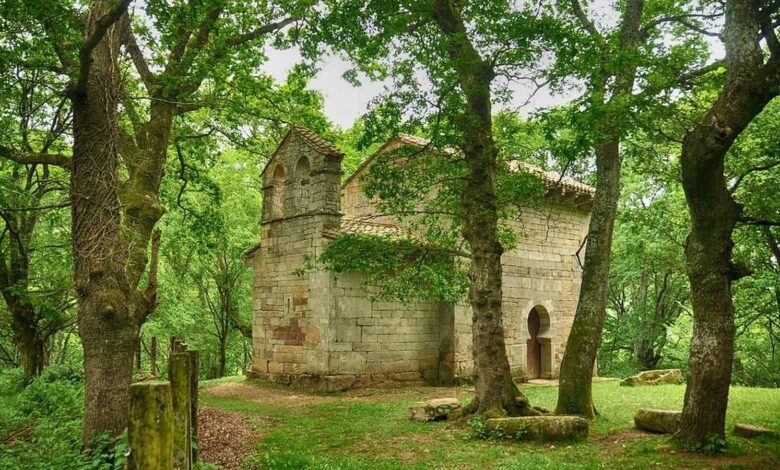
In the heart of Cantabria, where dense oak groves conceal their secrets, stands a modest yet remarkably ancient church. Its moss-covered, cracked walls seem to blend into the green shadows, and the silence is broken only by the rustle of leaves and the murmur of a nearby stream. Here, far from the tourist trails, time feels as if it has stood still, and every stone preserves echoes of long-gone eras.
Built in the 10th century, this church is considered one of the rarest examples of architecture born at the crossroads of cultures. Its appearance is linked to waves of migration and the blending of traditions, when in northern Spain, unique monuments emerged that incorporated features of both Christian and Eastern art. For centuries, locals treated the church with reverence, but only a few travelers dared to seek it out among the thickets and hills.
An Architectural Mystery
At first glance, the church appears almost toy-like: just twelve meters long and six meters wide. Yet beneath this simplicity lies a profound meaning. The building consists of a single rectangular hall with a wooden roof and a square altar facing east. The entrance is unusually placed—to the north, and the arch that leads inside is horseshoe-shaped, instantly revealing the influence of Eastern traditions.
There is little exterior decoration, but a keen eye will notice carved stone projections under the roof. Here you can make out floral motifs, geometric patterns, and even stylized swastikas—symbols that once had a completely different meaning and were reinterpreted in a Christian context. The small window in the altar area is framed by a cross of a unique shape, while the bell tower crowning the facade was added in later times.
Traces of ancient rituals
North of the church, archaeologists discovered an ancient cemetery. Stone tombs, sarcophagi, and fragments of ceremonial vessels were found here, among which a bronze jug stands out, once belonging to the Visigoths. These finds provide insight into the rituals and everyday life of the people who inhabited these lands a thousand years ago. Inside the church itself, elements unearthed during excavations have been preserved: fragments of columns, capitals adorned with palm leaves, and inverted arches that help recreate the atmosphere of the early Middle Ages.
Unlike the region’s more famous churches, this monument impresses with its austerity. There are no complex architectural solutions here; everything is governed by strict simplicity. But it is precisely this restraint and seclusion that give the church its special value. It seems to blend into nature, becoming an integral part of it.
A journey into the past
Reaching this place is not for the faint-hearted. The journey starts from a major city, passes through small villages, and ends on a forest road, where a sign unexpectedly points to an ancient monument. In summer, the church doors are open to all visitors, but during the rest of the year, you must contact the local authorities in advance to gain entry.
Once here, it’s impossible not to feel the presence of history. All around is forest, silence, and the sense that you have stepped into another era. This place seems made for reflection and inspiration. Everyone who has seen this church carries away not only memories, but also a longing to return.
Symbols and legends
This church is linked to the names of notable historical figures. At different times, it belonged to influential monasteries and was even gifted to a royal personage. Its fate became entwined with events that shaped the region’s history. Despite its modest size, the church has become a symbol of resilience and spiritual quest, with its walls witnessing more than one era of change.
Today, this monument remains little known, even among residents of Cantabria. However, for those seeking hidden routes and valuing an authentic atmosphere, it’s a true discovery. There are no crowds of tourists here, and the surrounding nature has stayed almost untouched. This is a place where past and present merge into one.
This church is more than just an architectural site; it is a living memory of the people who once built, prayed, and laid their loved ones to rest here. Every stone, every detail tells its own story, while the silence of the forest heightens the feeling of belonging to something greater.
The Church of San Román de Moroso is a unique early medieval monument tucked away in a secluded corner of Cantabria. Its architecture blends Visigothic and Eastern influences, and its history is intertwined with royal names and monasteries. Despite its modest size, the church is regarded as one of the most important testaments to the era of migrations in northern Spain. Today, it is open to visitors during the summer months and continues to attract those who appreciate history and tranquility.