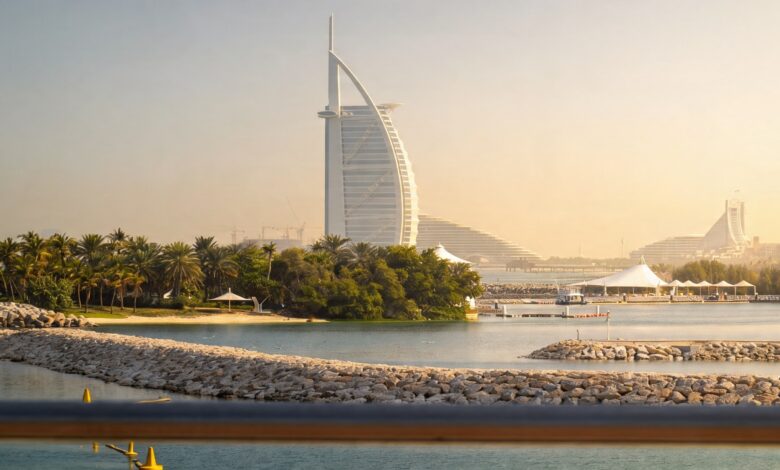
Amid growing instability in the Middle East, attention has turned to the vulnerability of the region’s new megacities. According to El Pais, cities like Dubai and Doha, which have developed over just a few decades, proved unprepared for potential military threats. Their residents do not see the protection of the city as their responsibility, while the countries they are located in are unable to provide adequate defense.
In recent years, armed conflicts in the region have led to destruction in cities such as Tyre, Sidon, and Beirut. Gaza is a particularly telling example, where, after heavy strikes, almost no buildings remain intact. As the source notes, the absence of effective state protection and the presence of hostile external forces make such cities especially vulnerable.
The vulnerability of new megacities
Economist Richard Florida, in an article for The New York Times, pointed out that even the most dynamic and modern cities are not immune to the consequences of war or other disasters. He emphasizes that during severe upheavals—whether military conflict, natural disaster, or abrupt legislative change—residents of megacities, especially those working remotely or without family ties, quickly leave dangerous areas in search of safety.
Unlike the historic cities of Europe, where residents have a deep connection to place and tradition, the new cities of the Persian Gulf were built with economic benefit and capital attraction in mind. As a result, according to El Pais, the majority of the population lacks a sense of civic responsibility for the fate of the city. This makes such metropolises ‘ephemeral’ — their existence depends on external factors and political stability.
Governance and Citizenship Features
In the Gulf countries, where Dubai, Abu Dhabi, Doha, and Riyadh are located, power belongs to a narrow elite, and citizenship rights are limited for most residents. According to El Pais, these cities have not become true civic communities, and the states themselves do not provide full protection for their metropolises. In the event of a threat, most residents prefer to leave rather than take part in the defense.
Unlike cities with centuries-old histories, where destruction is seen as a personal tragedy, in new metropolises the connection between residents and the city remains superficial. This is evidenced by the mass exodus at the first signs of danger.
Context for Spain
For Spain, the vulnerability of Middle Eastern metropolises is a reminder of the importance of sustainable urban communities and a developed civil protection system. Barcelona, according to Richard Florida, remains an example of a city capable of attracting and retaining the creative class even during global turmoil.