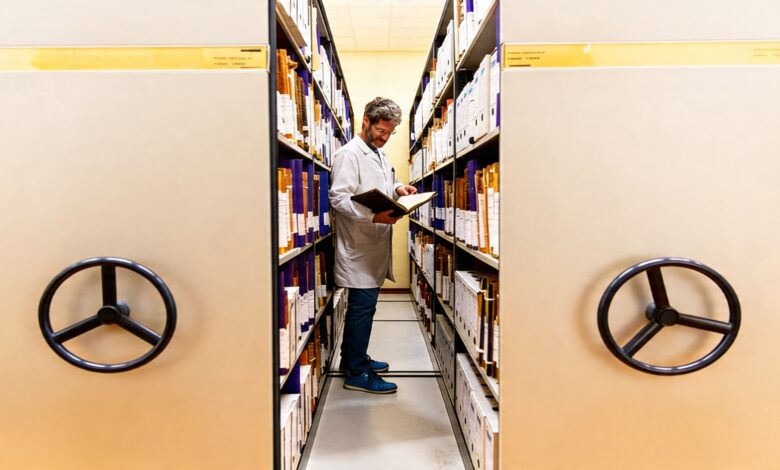
In Catalonia, church archives are on the verge of collapse due to a sharp increase in requests for baptism records. The cause is the Law of Democratic Memory, adopted in 2022, which opened the path to Spanish citizenship for descendants of émigrés and political exiles up to the third generation. According to El Pais, in the past year alone, Catalan archives have received over 13,000 requests—dozens of times more than usual.
Overload and new regulations
In most cases, applicants are searching for documents about relatives who left Spain in the 19th century. However, processing such a flow has proven impossible: many archives are staffed by only one or two employees, and some documents have been lost due to parish fires or the lack of precise information about ancestors. In Barcelona, only a third of the 4,300 requests resulted in certificates being issued; in Lleida, about 2,500 requests were processed. In Girona, the number of requests nearly tripled, and in Tarragona and Vic there have been hundreds of new applications. In some cases, the same record is requested by multiple relatives at once.
Fraud and questionable schemes
Archivists note that among the applicants are not only genuine descendants of emigrants, but also those trying to take advantage of the situation. There are cases where intermediaries and law firms charge clients hundreds of euros for services that cost much less at the archives. Some archives now require that only the applicants themselves, not third parties, request the documents. In Lleida, official papers are required to confirm kinship in order to reduce the risk of forgeries. According to El Pais, Spanish consulates have also tightened checks due to suspicion of falsification and now require additional proof of the authenticity of documents.
Applicants’ geography and motives
Most applications come from Latin America — especially Argentina, Cuba, Mexico, Brazil, and Venezuela. However, there are also requests from the US, the Netherlands, Colombia, and Chile. In some cases, applicants do not even know the full name of their ancestor or the exact place of birth, and sometimes try to guess the surname or send requests to all the country’s archives at once. Archivists note that some people seek citizenship out of interest in their roots, others — for economic or political reasons.
Increased workload and new fees
Before the law was enacted, such requests were rare, and certificates were often issued free of charge. Now, due to the influx of requests and the need to translate documents, archives have introduced a fee—from 9 to 90 euros per service. Employees note that the workload has increased several times, and the regular work of the archives has been paralyzed. In some cases, when applicants learn about the fee, they no longer get in touch.
A similar surge in requests is being observed in other regions of Spain, especially in Galicia, where more than 20,000 applications have been filed in Ourense alone. The situation resembles recent cases of mass requests and overloaded services, like those during major sporting events, when in Seville, thousands of people faced queues and strict entry controls.
Reference
According to the Council for Spanish Diaspora Affairs, by the end of 2025, more than 2.3 million descendants of Spaniards will be eligible for citizenship. Of the applications already reviewed, only 2% were rejected. To obtain citizenship, one must submit either a birth certificate of the ancestor or a baptismal extract for periods before 1871, when civil registries did not exist.