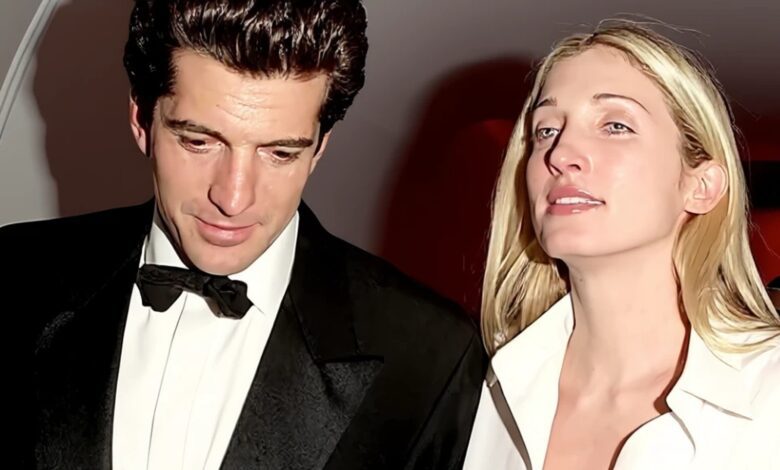
The series Love Story, focused on the relationship between John F. Kennedy Jr. and Carolyn Bessette, has sparked a heated debate about the boundaries of portraying real events on screen. After the show premiered on Disney Plus, members of the Kennedy family and close friends of the couple accused the creators of distorting facts, claiming that many details in the series are inaccurate and misrepresent the main characters.
Particular outrage was caused by scenes which, according to the family, dramatize and exaggerate personal moments from John and Carolyn’s lives. The son of John F. Kennedy and Jacqueline Kennedy, John-John, was always under media scrutiny; however, his nephew Jack Schlossberg sharply criticized Ryan Murphy for trying to profit from a family tragedy. He stressed that the series turns a private story into public spectacle, ignoring the values that Kennedy Jr. stood for.
Actress Daryl Hannah, who dated John F. Kennedy Jr. in the 1990s, also responded sharply. She publicly refuted several episodes related to her portrayal in Love Story, stating that she never used drugs, never held parties with illegal substances, and never interfered with family heirlooms. According to her, such insinuations are not only false but also give viewers a misleading impression of real people. Hannah also highlighted the gender aspect, arguing that the writers deliberately cast her character in a negative light to accentuate the contrast with Carolyn Bessette.
Criticism of portrayals and details
Not only the main characters but also supporting roles came under criticism. John F. Kennedy Jr.’s former assistant, Rose Marie Terenzio, said that the series portrayed her as a style icon, whereas in reality, she did not care about fashion. According to her, Carolyn often joked about her wardrobe, and John himself treated such matters with irony. Terenzio believes these details distort how Kennedy is perceived and create false stereotypes.
Questions have also been raised about the sources used in creating Love Story. As Mujerhoy reports, some storylines may have been drawn from unreliable publications and rumors widely circulated in 1990s tabloids. This has fueled the dissatisfaction of relatives and friends, who believe the show’s creators neglected fact-checking for dramatic effect.
The limits of artistic fiction
The situation surrounding Love Story once again raises the question of acceptable boundaries for artistic fiction when adapting real-life events. Relatives and friends of John F. Kennedy Jr. and Carolyn Bessette emphasize the need to respect the memory of those passed away and to ensure accuracy in representing their biographies. They point out that mass culture often replaces reality with fictional images, which can distort public perception of historical figures.
At the same time, Ryan Murphy openly acknowledges that his projects are based on material widely circulated in the media. According to Mujerhoy, Love Story reflects not so much actual events as their interpretation in popular consciousness, shaped by the press and rumors. This approach sparks debate about finding the balance between creative freedom and responsibility to the protagonists of recent history.
John F. Kennedy Jr. was one of the most prominent figures of the American elite at the end of the 20th century. His life and tragic death in a 1999 plane crash became a symbol of lost hope for many Kennedy family admirers. Carolyn Bessette, a former fashion executive, quickly became a style icon and the focus of media attention. Their relationship, marked by both romance and drama, continues to attract a wide audience and inspires new interpretations in film and television.